In the world of personal protective equipment (PPE), there’s an art to putting it on and taking it off that could rival a Broadway show. Donning and doffing PPE isn’t just a matter of style; it’s a vital process that keeps workers safe and sound. Imagine a superhero suit that requires precise moves to ensure no villainous germs sneak in.
Overview of PPE
Personal Protective Equipment (PPE) safeguards healthcare workers against exposure to infectious agents. Proper use of PPE is vital for maintaining safety in clinical environments.
Importance of PPE in Healthcare
PPE plays a crucial role in protecting healthcare providers from contaminants. Increased exposure to pathogens in hospitals heightens the need for effective protective measures. Studies show that PPE significantly reduces the transmission of infections, ensuring patient and staff safety. Adherence to PPE protocols minimizes risks associated with procedures involving bodily fluids. Hospitals and clinics prioritize PPE to enhance overall workplace safety and safeguard public health.
Types of PPE Used
Numerous types of PPE are utilized in healthcare settings. Gloves provide a barrier against direct contact with contaminants. Masks filter out harmful airborne particles and prevent droplet transmission. Gowns protect the skin and clothing from exposure to infectious materials. Face shields offer additional protection for the eyes and face. Respirators, such as N95s, provide superior filtration against airborne pathogens. By employing a variety of PPE, healthcare facilities create a comprehensive defense strategy against infections.
Donning PPE Order
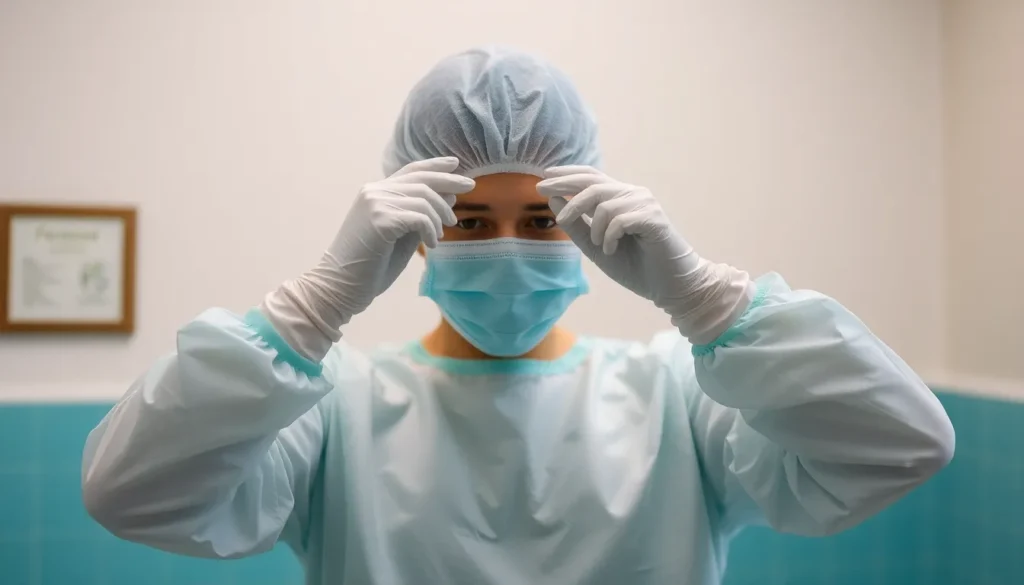
Properly donning PPE ensures maximum protection against infectious agents. Following the correct sequence is crucial for healthcare workers.
Step-by-Step Guide to Donning
- Hand hygiene: Start by thoroughly washing hands with soap or using an alcohol-based hand sanitizer.
- Gown: Put on the gown and ensure it fully covers clothing and fastens securely at the back.
- Mask or respirator: Place the mask or respirator over the nose and mouth, ensuring a snug fit.
- Eye protection: Apply goggles or a face shield, positioning them to fit comfortably over the mask.
- Gloves: Finally, don gloves, ensuring they extend to the wrist of the gown for complete coverage.
Common Mistakes to Avoid
Inadequate hand hygiene can undermine the entire donning process. Skipping the gown or not fastening it properly exposes vulnerabilities. Not ensuring a tight fit for masks or respirators leads to gaps that allow contaminants to enter. Forgetting eye protection may result in exposure to splashes or droplets. Always remember to don items in the proper sequence to maintain effective barriers against infectious agents.
Doffing PPE Order
Doffing PPE correctly is crucial for maintaining safety in clinical settings. This process minimizes the risk ofcontaminating oneself or the environment after exiting a potentially hazardous area.
Step-by-Step Guide to Doffing
- Remove gloves without touching the outer surface. Grasp the outside of one glove and peel it away, rolling it inside out as you go.
- Dispose of gloves in the designated waste container, ensuring that they do not come into contact with skin or clothing.
- Perform hand hygiene immediately after glove removal, using soap and water or an alcohol-based hand sanitizer.
- Remove gown, taking care to avoid touching the outside. Grasp the gown ties or back and pull it forward to peel it off, while rolling it inward.
- Dispose of the gown in a proper receptacle.
- Take off eye protection, handling it by the headband or ear pieces to avoid contact with the front.
- Final step involves removing the face mask or respirator, grasping the ties or ear loops without touching the front.
Importance of Proper Doffing Techniques
Proper doffing techniques prevent the spread of pathogens and protect healthcare providers from exposure. When done incorrectly, contaminants can easily transfer to skin or clothing. Maintaining a systematic approach ensures no step is omitted, reducing error likelihood. Proficient doffing not only safeguards the individual but also maintains a safe environment for patients and colleagues. Observing doffing protocols helps in controlling infection rates within healthcare settings. Each step in the process reinforces personal safety and public health.
Best Practices for PPE Use
Proper use of personal protective equipment (PPE) directly impacts safety in healthcare settings. These best practices enhance safety protocols and ensure effective protection against infectious agents.
Training and Education
Training programs are essential for all healthcare workers using PPE. Comprehensive education ensures understanding of protocols related to donning and doffing. Workshops can demonstrate correct techniques, allowing for hands-on practice. Regular refresher courses help maintain skills and reinforce knowledge over time. Assessing comprehension through evaluations can identify areas needing improvement. Incident reports can guide the development of tailored training sessions. Supervisors must support continuous education to adapt to changing guidelines and technologies.
Maintaining PPE Integrity
Integrity of PPE affects its effectiveness. Regular inspections for damage, such as tears or punctures, help ensure optimal protection. PPE storage in clean, dry areas can prevent contamination. Following the manufacturer’s guidelines for usage and disposal keeps equipment functioning correctly. Discarding single-use items properly prevents potential exposure to pathogens. Washing reusable PPE according to established protocols maintains hygiene standards. Documenting usage and maintenance schedules aids in inventory management and accountability.
Mastering the art of donning and doffing PPE is vital for ensuring safety in healthcare environments. Each step plays a crucial role in preventing contamination and protecting both healthcare providers and patients. By following established protocols and emphasizing proper techniques, organizations can significantly reduce the risk of infection transmission.
Ongoing training and adherence to best practices are essential for maintaining high safety standards. Regular assessments of PPE integrity and usage further enhance protective measures. Ultimately, a systematic approach to PPE usage not only safeguards individual health but also contributes to the overall well-being of the community.