Industrial electrical maintenance might seem like a topic reserved for factory managers and plant engineers, but there’s a growing number of homeowners who encounter industrial-grade electrical systems in workshops, home shops, large garages, and properties with commercial equipment. Whether a homeowner has inherited a property with three-phase power, installed a CNC machine in their shop, or runs high-demand welding equipment, understanding the fundamentals of industrial electrical maintenance can prevent costly failures, dangerous malfunctions, and code violations. This guide breaks down what industrial electrical maintenance involves, where it diverges from typical residential work, and which tasks can be safely handled without a commercial electrician on speed dial.
Table of Contents
ToggleKey Takeaways
- Industrial electrical maintenance prevents costly equipment failures, electrical fires, and dangerous arc flash events by addressing high-capacity systems that operate at 208V–600V three-phase power, far beyond residential 120/240V single-phase standards.
- Always use voltage-rated PPE, de-energize circuits via lockout/tagout (LOTO) procedures, and verify zero voltage before any work to safely manage arc flash hazards that pose electrocution and burn risks on industrial systems.
- Homeowners can safely perform routine visual inspections, dust removal, connection tightening, and basic multimeter testing on workshop equipment, but must hire licensed electricians for three-phase panels, motor controls, and permit-required installations above 240V.
- Understand the key differences between residential and industrial electrical systems—including three-phase power delivery, continuous-duty components, metal conduit requirements, and visible disconnect switches—to recognize when you’re stepping outside DIY-safe territory.
- Thermal imaging and insulation resistance testing identify hidden maintenance issues like loose connections and degraded wiring before they cause catastrophic failures or void equipment warranties and insurance coverage.
What Is Industrial Electrical Maintenance and Why It Matters
Industrial electrical maintenance refers to the routine inspection, testing, cleaning, and repair of electrical systems designed for high-capacity, continuous-duty applications. Unlike residential systems that typically operate at 120/240 volts single-phase, industrial setups often use 208V, 480V, or 600V three-phase power to run motors, compressors, and heavy machinery.
The goal of maintenance in these environments is to prevent unplanned downtime, electrical fires, and catastrophic equipment failure. Industrial electrical components, motor starters, contactors, transformers, VFDs (variable frequency drives), and disconnect switches, experience heat cycling, vibration, dust, and moisture that residential breaker panels never see.
For homeowners, this matters when operating equipment like:
- Large woodworking machinery (table saws, planers with 3+ HP motors)
- Welders and plasma cutters drawing 50+ amps
- HVAC systems for workshops or barns
- Irrigation pump stations or well systems with industrial-duty controls
Neglecting maintenance on these systems can lead to nuisance tripping, motor burnout, or worse, arc flash events that cause severe injury. Regular upkeep extends equipment lifespan, maintains warranty coverage, and keeps insurance valid on high-value tools.
Key Differences Between Residential and Industrial Electrical Systems
Understanding what separates industrial from residential electrical work helps homeowners recognize when they’re stepping outside familiar territory.
Voltage and Phase: Residential circuits max out at 240V single-phase. Industrial systems commonly use three-phase power, which delivers more consistent current to motors and reduces conductor size requirements. A 5 HP motor on single-phase draws about 28 amps at 240V: the same motor on three-phase 480V pulls roughly 7 amps, drastically different wire gauge and breaker sizing.
Equipment Duty Cycle: Residential breakers and outlets are rated for intermittent use. Industrial components are built for continuous duty, running 24/7 without thermal overload. Motor starters, for example, include overload relays calibrated to trip only when current exceeds motor nameplate specs by 15-25% for a sustained period.
Conduit and Wiring Methods: Romex (NM cable) is standard in homes but prohibited in most industrial and commercial applications. Pros working on advanced construction techniques use metal conduit (EMT, rigid, or flex) and THHN/THWN wire pulled through raceways. Conduit protects conductors from mechanical damage and provides a ground path.
Disconnect and Lockout/Tagout (LOTO): Industrial equipment requires a visible disconnect switch within sight of the machine, per NEC Article 430. This allows safe isolation during maintenance. Residential panels rarely include this feature. LOTO procedures, using padlocks and tags to prevent accidental energization, are standard in industrial settings and critical for DIYers working on shop equipment.
Arc Flash Hazard: Higher voltages and fault currents create arc flash risk, explosive releases of energy that can cause burns and blindness. Residential panels pose minimal arc flash danger: industrial gear above 240V requires PPE, labeling, and training.
Essential Safety Precautions for DIY Electrical Work
Before touching any industrial electrical component, treat every circuit as energized until verified otherwise. Arc flash and electrocution risks escalate dramatically above residential voltage.
Personal Protective Equipment (PPE):
- Voltage-rated gloves (Class 00 for up to 500V, Class 0 for up to 1,000V) with leather protectors
- Safety glasses with side shields (minimum: arc-rated face shields for panel work)
- Insulated tools rated for the working voltage
- Flame-resistant (FR) clothing if working on energized equipment above 240V
- Rubber-soled boots with no exposed metal eyelets
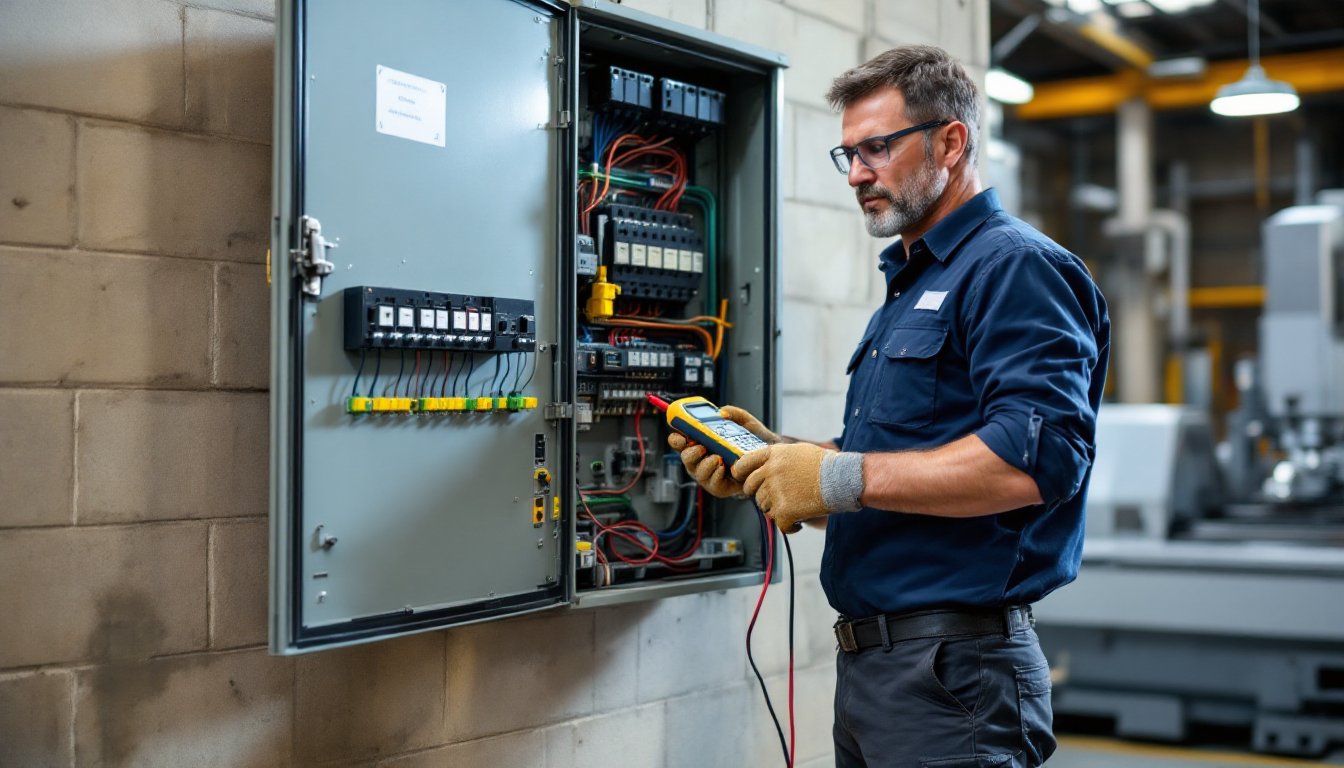
Lockout/Tagout (LOTO): Always de-energize circuits at the source. Turn off the disconnect, open the breaker, and lock it with a padlock that only the worker holds the key to. Attach a tag stating “Do Not Operate” with the worker’s name and date. Test for zero voltage with a non-contact voltage tester and a multimeter to confirm.
Arc Flash Boundaries: The NEC and NFPA 70E define limited approach boundaries based on voltage. For 480V systems, the boundary is typically 42 inches. Don’t cross it with uninsulated body parts unless wearing appropriate PPE.
Qualified Person Definition: NEC Article 100 defines a qualified person as someone trained to recognize and avoid electrical hazards. If you lack formal training on three-phase systems, VFDs, or motor controls, hire a licensed industrial electrician. DIY confidence doesn’t translate to competence above 240V.
Common Industrial-Grade Electrical Maintenance Tasks You Can Handle
Certain routine tasks don’t require an electrician’s license but do demand respect for safety protocols and attention to detail. These apply to home workshops and properties with industrial equipment.
Visual Inspections: Monthly walkthroughs catch problems before they escalate. Look for:
- Discolored breakers or terminals indicating overheating
- Burn marks or melted insulation near connections
- Loose or vibrating components (loose screws in motor starters)
- Rodent damage to insulation or conduit
- Corrosion on terminals in damp environments
Document findings with photos and date stamps.
Cleaning and Dust Removal: Dust buildup on contactors, relays, and ventilation grilles reduces cooling efficiency. De-energize and lock out the panel, then use compressed air (wearing a dust mask) to blow out enclosures. For greasy dust in machine shops, wipe terminals with lint-free rags dampened with contact cleaner.
Tightening Connections: Thermal cycling causes terminal screws to loosen over time, increasing resistance and heat. Use a torque screwdriver or torque wrench to tighten lugs to manufacturer specs (often 20-30 in-lbs for #14-#10 wire, higher for larger gauges). Over-torquing strips threads: under-torquing invites arcing.
Replacing Fuses and Checking Breakers: If a circuit trips repeatedly, investigate the cause, don’t just reset it. Check for:
- Motor overload (nameplate vs. actual draw)
- Worn motor bearings causing current spikes
- Short circuits in conduit or equipment
Replace time-delay fuses with identical amperage and type. Never use a higher-rated fuse to “fix” nuisance tripping.
Inspecting and Testing Electrical Components
Testing verifies that components function within safe parameters. Always de-energize before testing resistance or continuity.
Multimeter Testing:
- Voltage: Confirm zero voltage at disconnects and terminals before touching.
- Continuity: Test conductors, fuses, and relay coils for open circuits.
- Resistance: Measure motor windings for shorts to ground (insulation resistance should exceed 1 megohm).
Thermal Imaging: A thermal camera (rental units run $50-100/day) identifies hot spots invisible to the naked eye. Scan panels, motor starters, and junction boxes for temperatures 20°F+ above ambient, a sign of loose connections or overload.
Insulation Resistance Testing: Use a megohmmeter (megger) to test cable and motor winding insulation. Apply 500V DC for systems under 1,000V. Readings below 1 megohm indicate degraded insulation requiring professional evaluation.
Ground Fault Testing: Portable home maintenance guides often recommend GFCI testers for outlets. Industrial systems use ground fault relays on equipment circuits. Test monthly per manufacturer instructions.
When to Call a Professional Electrician
Some tasks legally and practically require a licensed electrician. Don’t gamble with permit violations, insurance claims, or personal safety.
Permit-Required Work: Most jurisdictions require permits and inspections for:
- Installing or relocating three-phase panels or transformers
- Running new circuits above 50 amps
- Connecting equipment over 240V
- Altering service entrance conductors
Unpermitted work can void homeowner’s insurance and complicate property sales.
High-Voltage Systems: Anything above 240V, 480V motors, step-down transformers, VFDs, should be left to pros. The arc flash hazard and specialized knowledge required (motor FLA vs. LRA, harmonic filtering, phase imbalance) exceed typical DIY scope.
Motor Control Circuits: Wiring motor starters, overload relays, and control transformers involves understanding ladder logic, holding contacts, and interlock circuits. Miswiring can destroy equipment or create unsafe conditions. Resources on hands-on DIY tutorials rarely cover industrial control wiring in adequate depth.
Arc Flash Studies and Labeling: Commercial and industrial panels require arc flash hazard labels per NFPA 70E. Calculating incident energy and arc flash boundaries demands specialized software and training, not a DIY project.
Troubleshooting Complex Faults: Intermittent trips, phase loss, harmonic distortion, and ground fault hunting often require oscilloscopes, power quality analyzers, and diagnostic expertise beyond a homeowner’s toolbox.
Insurance and Liability: If electrical work contributes to a fire or injury, insurance may deny claims if an unlicensed person performed the work. Licensed electricians carry liability coverage and pull permits, documentation that protects homeowners.
Conclusion
Industrial electrical maintenance straddles the line between ambitious DIY and professional territory. Homeowners can safely handle routine inspections, cleaning, and basic testing with proper PPE, LOTO procedures, and respect for voltage limits. But three-phase systems, motor controls, and permit-required alterations belong in the hands of licensed electricians. The key is knowing where confidence ends and competence begins, and when that distinction can literally save a life.