Arizona backyards come with unique advantages, year-round sunshine, dramatic desert views, and outdoor living potential that most climates can’t match. But not every homeowner wants the maintenance, water bills, or upkeep that pools demand. Skipping the pool doesn’t mean sacrificing function or beauty. Instead, it opens up space for shade structures, fire features, native landscaping, and entertainment zones that actually get used beyond the four months of comfortable swimming weather. This guide walks through practical, heat-tested Arizona backyard ideas that maximize outdoor living without the ongoing burden of pool care.
Table of Contents
ToggleKey Takeaways
- Arizona backyard ideas without pools eliminate $50–$100+ monthly pump bills, frequent chemical treatments, and 18,000 gallons of annual water loss through evaporation, while freeing up space for year-round usable outdoor areas.
- Native desert plants like palo verde, agave, and red yucca paired with drip irrigation and decomposed granite hardscaping create low-maintenance landscapes that thrive in Arizona heat without the water demands of traditional turf.
- Covered patios, ramadas, and shade structures (pergolas, shade sails, retractable awnings) extend outdoor living comfort for ten months annually by reducing radiant heat and providing functional entertainment zones beyond the limited swimming season.
- Fire pits, gas fire tables, and linear fire features using tempered glass filler bring modern aesthetics and extend usability into cooler fall and winter months when pools remain unused.
- Strategic hardscaping with pavers, flagstone pathways, and stabilized decomposed granite outperforms poured concrete in Arizona’s expansive clay soils while complementing desert landscaping design.
- Outdoor lighting, ceiling fans with misting systems, weather-resistant furniture, and entertainment features like audio systems transform pool-free Arizona backyards into multi-functional spaces that align with the state’s true climate advantages.
Why Choose a Pool-Free Arizona Backyard?
Pools in Arizona carry hidden costs that extend far beyond the initial installation. Monthly chemical treatments, pump energy bills (often $50–$100+ in peak summer), surface resurfacing every 10–15 years, and weekly skimming add up fast. Water loss through evaporation averages 1/4 inch per day in Arizona’s low humidity, that’s roughly 18,000 gallons annually for a standard 20′ × 40′ pool.
Maintenance also demands time. Filter cleaning, pH balancing, and debris removal require consistent effort, especially during monsoon season when dust storms and blowing vegetation clog systems overnight. Homeowners who travel or work long hours often find themselves paying for weekly service contracts that run $80–$150/month.
A pool-free design reclaims that square footage for uses that align better with Arizona’s true outdoor season. Instead of a feature that’s too cold from November through March and occasionally too warm in July and August, homeowners can invest in covered patios, ramadas, and hardscaping that function comfortably ten months of the year. It’s a shift toward usability over aspiration.
Desert Landscaping That Thrives in Arizona Heat
Native and desert-adapted plants deliver color, texture, and structure without the water demands of traditional turf. Palo verde, mesquite, and ironwood trees provide dappled shade and establish quickly in decomposed granite or native soil. Accent plants like red yucca, agave, and prickly pear add sculptural interest and require minimal irrigation once established.
Drip irrigation systems are non-negotiable for long-term success. Install 1/2-inch polyethylene mainline with 1/4-inch spaghetti tubing and emitters rated at 0.5–2 gallons per hour depending on plant size. Group plants by water needs (hydrozoning) to avoid overwatering drought-tolerant species while keeping bloom-heavy varieties like desert marigold and penstemon adequately supplied.
Decomposed granite (DG) is a staple hardscape material for Arizona yards. It compacts well, stays cooler underfoot than concrete, and complements the natural desert palette. Stabilized DG with resin binders reduces tracking indoors and holds up better under foot traffic. Expect to pay $40–$60 per ton delivered, with coverage around 100 square feet at 3-inch depth per ton.
Boulder placement and dry creek beds mimic natural desert washes and help with drainage during monsoons. Use moss rock or apache brown boulders sized from 12 inches to 36 inches across. Strategic outdoor space planning ensures these elements look intentional rather than random.
Outdoor Living Spaces for Year-Round Enjoyment
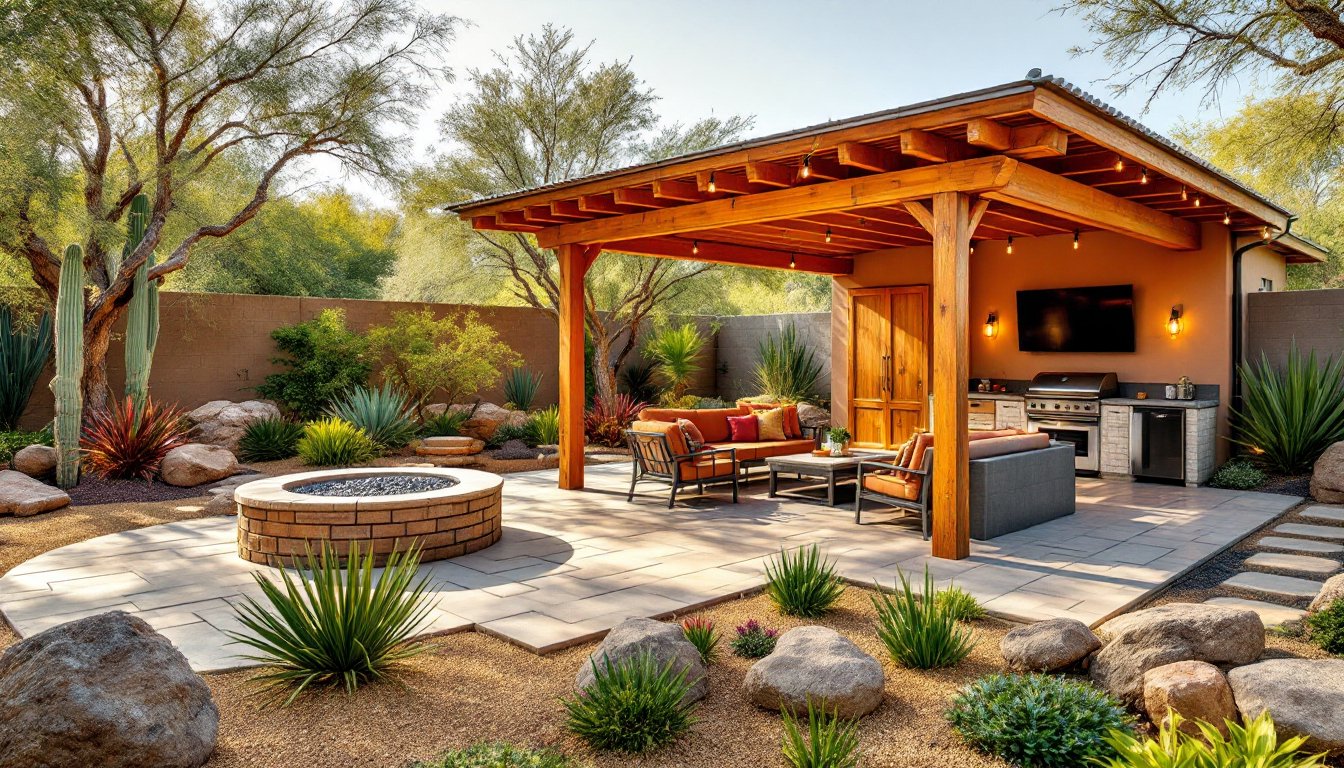
A covered patio or ramada transforms a backyard from decorative to functional. In Arizona, solid roof structures with insulated panels or tongue-and-groove cedar decking provide true shade and reduce radiant heat. Lattice and shade cloth (typically 80–90% shade density) work for morning sun areas but won’t cut midday temperatures enough for comfort from May through September.
Dimensions matter. A 12′ × 16′ covered area accommodates a dining table for six plus a seating zone, while 16′ × 20′ allows for sectional furniture, a grill station, and clearance for traffic flow. Posts should be set in concrete footings at least 18 inches deep to meet IRC standards and handle wind loads during monsoons.
Outdoor kitchens don’t require top-tier appliances to be useful. A built-in natural gas or propane grill, small refrigerator, and concrete or stone countertop for prep work cover most needs. Stucco-clad concrete block or steel-frame cabinetry holds up better than wood in UV exposure. Skip the Big Green Egg unless it’ll actually get used, most Arizona cooks prefer the convenience of gas when it’s 105°F outside.
Flooring under covered areas benefits from slip-resistant finishes. Saltillo tile, flagstone, or stained and sealed concrete all work well. Avoid polished travertine unless it’s honed and sealed: it becomes dangerously slick when wet and holds heat. Creating a dedicated entertainment space means matching materials to real-world use, not just aesthetics.
Ceiling fans rated for wet/damp locations (UL listing required) make covered patios usable during shoulder seasons. Look for models with 5,000+ CFM airflow for spaces over 200 square feet. Pair with misting systems for evaporative cooling, lines and nozzles run around $150–$300 for DIY kits covering 20–30 linear feet.
Shade Solutions to Beat the Arizona Sun
Freestanding shade sails offer flexible coverage for play areas, secondary patios, or garden zones. Use commercial-grade HDPE fabric rated at 90–95% UV block, and anchor corners to steel posts set in concrete footings or existing structural members. Sails should have 5–10% slope for water runoff and tensioned properly to prevent flapping and fabric fatigue. Expect quality sails to last 8–12 years before UV degradation requires replacement.
Pergolas provide partial shade and architectural interest but won’t reduce temperatures as effectively as solid roofs. Standard 4×4 or 6×6 posts with 2×6 or 2×8 rafters on 16-inch centers create classic proportions. Western red cedar and redwood resist rot naturally, while pressure-treated lumber offers budget savings at $8–$12 per linear foot versus $15–$25 for cedar. Add retractable canopy fabric or climbing vines like desert honeysuckle or bougainvillea for additional coverage.
Ramadas (solid-roof shade structures common in Arizona) use either wood framing with composite or metal roofing or engineered aluminum kits. DIY builds with pressure-treated posts, 2×6 framing, and corrugated metal roofing run $12–$18 per square foot in materials. Prefab aluminum systems cost more upfront ($25–$40/sq ft installed) but require zero maintenance.
Retractable awnings work for west- and east-facing exposures where shade needs change with the sun. Motorized units with wind sensors automatically retract during monsoon gusts. Fabric longevity is shorter than fixed structures, plan on 5–7 years in full Arizona sun before fading and UV breakdown necessitate replacement. Resources like Better Homes & Gardens frequently highlight installation tips for shade structures in harsh climates.
Fire Features and Outdoor Entertainment Areas
Fire pits extend outdoor usability from October through April when evenings cool down. Natural gas or propane fire tables eliminate wood smoke, ash cleanup, and open-flame regulations that restrict wood-burning in some HOAs and municipalities. Gas units also allow instant ignition and adjustable flame height. Expect BTU ratings between 40,000–60,000 BTU for adequate warmth in a 10–12 foot radius.
Built-in fire pits using stacked stone or concrete block veneer over a steel insert offer a custom look. Line the interior with fire brick rated to 2000°F+ if burning wood. Ensure proper ventilation and keep seating at least 3 feet from the fire ring. Check local fire codes, some Arizona cities require spark arrestors or prohibit wood fires during high wind or pollution alerts.
Linear gas fire features integrated into seat walls or as standalone focal points bring modern aesthetics without the bulk of traditional round pits. Use crushed tempered glass or lava rock as filler media. Glass reflects flame light and comes in colors ranging from clear to copper and cobalt. Lava rock is cheaper ($20–$30 per 10-lb bag vs. $40–$80 for glass) but doesn’t have the same visual punch.
Outdoor audio systems enhance entertainment areas. Weather-resistant rock speakers blend into desert landscaping, while wall-mounted models handle covered patio zones. Bluetooth connectivity eliminates running speaker wire, but hardwired systems deliver better sound quality for dedicated setups. A well-designed backyard balances technology with the natural environment.
Outdoor lighting layers functionality and ambiance. Use low-voltage LED path lights (12V systems) for safety along walkways and stairs. Uplighting on trees and architectural features adds drama without light pollution. String lights (Edison-style bulbs or LEDs) soften covered patios. Install all exterior lighting on photocell timers or smart switches to automate on/off cycles and reduce energy waste.
Low-Maintenance Hardscaping and Pathways
Pavers outperform poured concrete in Arizona’s soil conditions. Expansive clay and shifting decomposed granite cause concrete slabs to crack, but pavers move independently and can be releveled as needed. Concrete pavers run $3–$8 per square foot in materials, while natural stone (flagstone, travertine) ranges from $12–$25/sq ft.
Base preparation determines longevity. Excavate to 6–8 inches below finished grade, install 4 inches of crushed Class II road base, compact with a plate compactor, then add 1 inch of leveling sand. Edge restraint (plastic or aluminum) prevents paver migration. Polymeric sand swept into joints hardens when wetted and resists weed growth and ant colonization better than standard mason sand.
Flagstone set in decomposed granite creates informal pathways that complement desert landscaping. Use 1.5–2.5 inch thick flagstone to prevent cracking underfoot. Space stones 2–4 inches apart and backfill with stabilized DG. This method drains quickly during monsoons and avoids the heat retention of solid concrete walks.
Gravel pathways offer the lowest-cost option at $1–$3 per square foot installed. Use 3/4-inch crushed granite or pea gravel over landscape fabric to suppress weeds. Metal or stone edging keeps gravel contained. Gravel does require periodic top-dressing as material compacts and scatters, but it’s far easier than repairing cracked concrete.
Artificial turf serves as a low-water alternative to grass in high-traffic or play areas. Modern products include antimicrobial infill and perforated backing for drainage and pet use. Costs run $8–$15 per square foot installed, including base prep and seaming. Quality turf lasts 10–15 years before UV degradation affects appearance. It does retain heat, surface temps can hit 160–180°F in direct sun, so it’s best used in shaded zones or areas with morning-only sun exposure. Exploring alternative ground covers helps homeowners weigh turf against native or synthetic options.
Outdoor furniture and fixtures should be powder-coated aluminum or steel rather than wrought iron (which rusts) or resin wicker (which UV-degrades). Look for solution-dyed acrylic fabrics (Sunbrella is the common brand) rated for 1,500+ hours of UV exposure. Store cushions during monsoon season or invest in weatherproof storage boxes. Design inspiration from southwestern outdoor living showcases durable material choices in action.
Conclusion
Arizona backyards without pools offer more usable square footage, lower ongoing costs, and outdoor living spaces that align with the state’s true climate advantages. Prioritizing shade, native landscaping, and durable hardscaping creates a yard that functions comfortably for most of the year rather than just a few summer months. Start with one anchor feature, a ramada, fire pit, or desert garden, and build out from there as budget and time allow.