Above ground pools get a bad rap. Too often, they sit like blue plastic afterthoughts, surrounded by bare grass and chain-link fencing. But with the right approach, these affordable alternatives to in-ground pools can become genuine backyard centerpieces. The key is treating the pool as part of a cohesive outdoor living plan, not just a water-filled tub. This guide walks through practical, tested ideas for decking, landscaping, privacy, lighting, furniture, and safety, transforming an above ground pool into a space worth showing off.
Table of Contents
ToggleKey Takeaways
- A well-designed deck that wraps around the above ground pool hides sidewalls and creates seamless entry, transforming it from a plastic afterthought into a true backyard centerpiece.
- Strategic plantings like ornamental grasses and clumping bamboo soften pool edges while avoiding root systems that damage liners, and mulched beds reduce mud tracking.
- Privacy solutions range from budget-friendly lattice panels ($25–$40 each) with climbing vines to horizontal slat fencing or living screens of arborvitae planted 3–4 feet apart.
- Low-voltage LED lighting on deck posts, string lights overhead, and floating pool lights extend usability into evening hours while creating an inviting ambiance without excessive wiring.
- Furniture zones—wet (poolside), dry (lounge), and service (drinks/towels)—with weather-resistant materials and shade structures transform the pool area into a full outdoor living space for entertaining.
- Above ground pool safety requires self-closing gates with latches 54 inches high, GFCI protection within 20 feet of the pool, proper bonding of electrical equipment, and removal of ladders when the pool is closed.
Create a Resort-Style Deck Around Your Pool
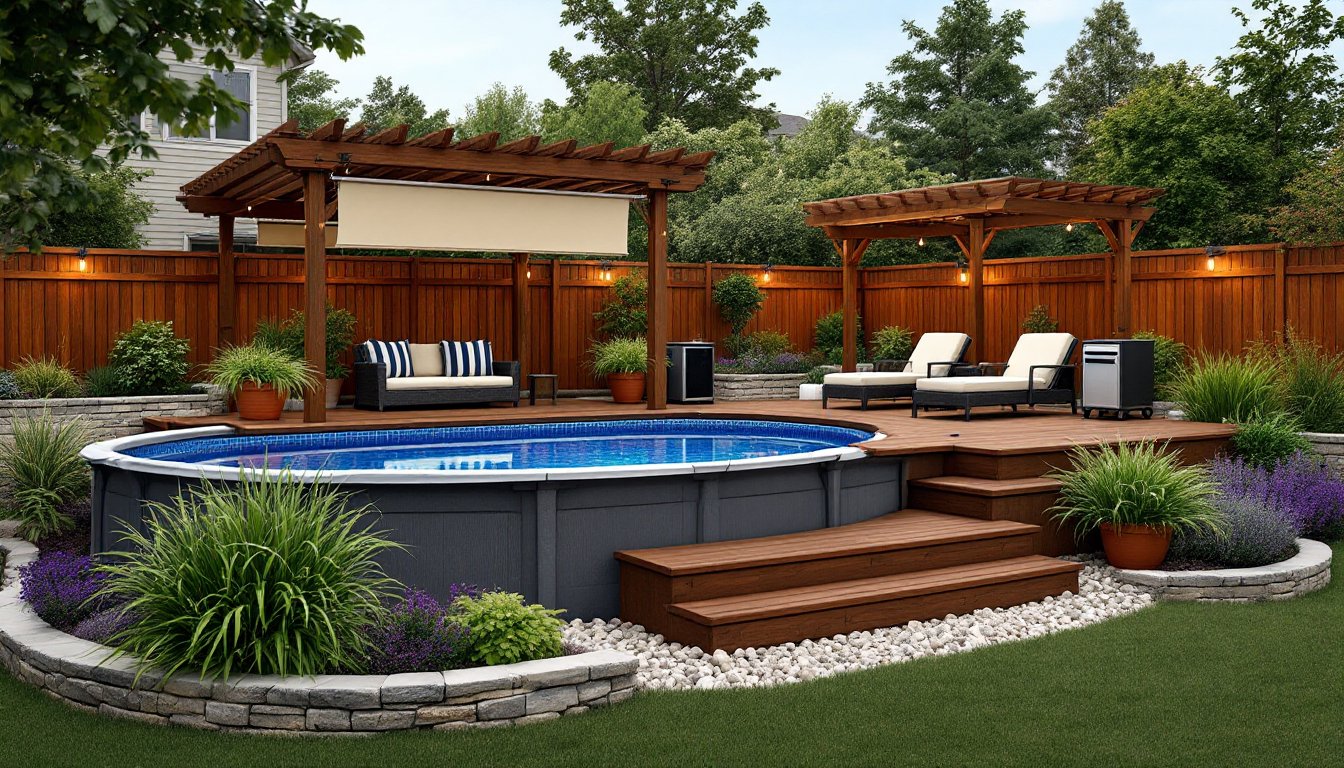
A deck elevates an above ground pool, literally and visually. Building a platform deck that wraps partially or fully around the pool hides the sidewalls and creates seamless entry. For a 24-foot round pool, plan on a deck surface at least 8–10 feet wide on the main access side, tapering to narrower walkways elsewhere.
Use pressure-treated lumber for framing (joists on 16-inch centers for residential loads) and composite decking for the surface if budget allows. Composite resists splintering and fading, critical around wet, bare feet. If using standard pine or cedar decking boards, apply a waterproof stain every 2–3 years.
Most jurisdictions classify pool decks as structures requiring a building permit, especially if the deck height exceeds 30 inches above grade. Check local codes for railing requirements (typically 36–42 inches high with pickets spaced no more than 4 inches apart). Some areas also mandate self-closing gates if the deck serves as pool access.
Add built-in bench seating along one edge and a small set of swim ladder steps integrated into the deck. These details make the pool feel intentional, not improvised. For a high-end look, consider a backyard entertainment area layout that extends the deck into a secondary lounge zone with shade structures.
Landscaping Ideas to Blend Your Pool Naturally
Strategic plantings soften hard pool edges and tie the setup into the larger yard. Avoid trees with aggressive root systems (willows, poplars) that can buckle deck footings or puncture pool liners.
Ornamental grasses like fountain grass (Pennisetum) and blue fescue work well in 3–5 foot clusters around deck perimeters. They’re low-maintenance, tolerate reflected heat, and add movement without dropping debris into the water. For vertical interest, plant clumping bamboo (non-invasive varieties like Fargesia) in large planters or confined beds.
Mulched plant beds around the pool deck reduce mud tracking. Use river rock or pea gravel in a 4–6 inch layer as a clean border between grass and deck. This also improves drainage and keeps mower blades away from deck posts.
If the pool sits on a slope, terraced retaining walls built from concrete blocks or natural stone create level planting zones. A 2–3 foot tiered garden planted with low-water perennials (sedum, lavender, coneflower) turns a liability into a focal point. Paint metal pool walls in muted tones, charcoal gray, sage green, or navy, to help them recede into the landscape, as demonstrated in DIY painted pool makeovers.
Budget-Friendly Privacy Solutions
Most above ground pools sit at eye level with neighbors’ yards. Privacy doesn’t require a fortress, just enough visual interruption to make swimmers comfortable.
Lattice panels (4×8 feet, typically $25–$40 each at home centers) mounted on 4×4 posts create instant screening. Set posts in concrete footings at least 24 inches deep and attach panels with galvanized screws. Train fast-growing vines like clematis or hops up the lattice for living coverage within one season.
Outdoor curtains on a galvanized pipe frame offer adjustable privacy. Use marine-grade fabric or outdoor Sunbrella material that resists mildew. Mount curtain rods on posts anchored into deck framing, and add grommets with stainless steel rings for smooth sliding.
For a more permanent solution, horizontal slat fencing (similar to modern horizontal board fences) built from 1×6 cedar or pine with 1–2 inch gaps provides airflow while blocking sightlines. A 6-foot tall screen running along one or two sides is usually sufficient, no need to enclose the entire pool.
Privacy plantings work if you have time. A row of arborvitae (Thuja ‘Green Giant’) or skip laurel planted 3–4 feet apart will reach 8–10 feet in 3–5 years. Keep plantings at least 6–8 feet from the pool edge to minimize leaf litter.
Lighting and Ambiance Enhancements
Lighting extends pool use into evening hours and transforms the space from utilitarian to inviting. Start with safety: deck post lights or recessed step lights (12V LED systems) along stairs and walkways prevent trips. Most low-voltage kits include a transformer that plugs into a GFCI-protected outlet, mandatory for outdoor wet locations per NEC Article 680.
String lights are the simplest ambiance upgrade. Run 25–50 foot strands of Edison-style bulbs (LED versions draw less power and last longer) overhead on a pergola frame or between deck posts and nearby trees. Use galvanized eye hooks and vinyl-coated cable rated for outdoor use. A single 15-amp circuit can typically handle up to 1,440 watts, enough for several strands plus other deck outlets.
Floating pool lights (battery or solar-powered LED orbs) add color without wiring. Look for models rated IP68 (submersible) to avoid early failures.
For a more integrated look, install RGB LED strip lighting underneath deck railings or along the pool rim. Use a weatherproof controller to cycle colors or set static tones. Many homeowners find that exploring backyard features like custom lighting setups can dramatically improve nighttime appeal.
Solar pathway lights along backyard set-up routes guide guests from the house to the pool. Stake them 18–24 inches apart for consistent illumination.
Pool Area Furniture and Entertaining Zones
Furniture placement separates a swim-only setup from an outdoor living space. Designate distinct zones: wet (poolside), dry (lounge), and service (drinks, towels).
Poolside: Use resin wicker or aluminum lounge chairs with quick-dry mesh fabric. Wood furniture looks great but requires more upkeep (annual sealing). Space loungers 3–4 feet apart for comfortable traffic flow. Add a weather-resistant side table for each pair of chairs.
Dry lounge zone: If the deck is large enough (or you build a secondary patio nearby), create a conversation area with a sectional sofa or Adirondack chairs grouped around a fire pit (gas or propane models eliminate smoke and spark hazards near the pool). Keep open flames at least 10 feet from pool edges and any vinyl surfaces.
Service area: A rolling bar cart or small outdoor credenza keeps towels, sunscreen, and drinks accessible. If running power to the pool deck, add a mini fridge (outdoor-rated models handle temperature swings better). Some designs incorporate a fun backyard space with built-in coolers or wet bars.
Shade structures: A 10×10 foot pop-up canopy ($100–$200) offers temporary relief. For permanent shade, build a pergola with 2×6 or 2×8 rafters spaced 12–16 inches apart. Add a retractable canopy or train vines across the top. Cantilever umbrellas (base-weighted models rated for wind) work well for flexible shading.
Safety and Functionality Upgrades
Above ground pools still require the same safety considerations as in-ground models. Removable pool ladders (store them when the pool is closed) prevent unsupervised child access, but aren’t a substitute for proper barriers.
If the deck has stairs, install a self-closing, self-latching gate with a latch mounted 54 inches above the deck surface (out of reach for young children). Many jurisdictions require four-sided isolation fencing, check local pool codes.
GFCI protection is non-negotiable for all outlets within 20 feet of the pool per NEC 680.22(A). If the pool uses an electric pump or heater, ensure it’s on a dedicated 15- or 20-amp circuit and that the equipment is bonded (grounded to a common electrode system).
Add a first aid kit and a reaching pole (telescoping models work for pool cleaning and emergencies) stored on deck hooks. A poolside storage bench (resin models with waterproof interiors) keeps rescue equipment, chemicals, and cleaning tools organized.
For households managing low-maintenance pool setups, consider a saltwater chlorine generator and an automatic pool cover (custom-fit models are available for many above ground pool shapes). Covers reduce debris, cut chemical use, and add a safety layer.
Finally, keep the area around the pool clear. Anchor furniture during storms, trim back overhanging branches, and ensure deck surfaces stay slip-resistant (apply anti-slip deck coatings or use textured composite decking).
Conclusion
An above ground pool doesn’t have to look like a compromise. With thoughtful design, decking that integrates, landscaping that softens, lighting that extends use, and furniture that invites lounging, it becomes a genuine backyard asset. Most of these upgrades are weekend-scale projects that deliver immediate impact without requiring a contractor. Start with one or two elements and build out over seasons as time and budget allow.