Pool plumbing problems have a way of showing up at the worst possible time, usually right before a weekend swim party or when the kids are home for summer break. Whether it’s a mysterious water loss, weak circulation, or strange gurgling noises from the equipment pad, most pool plumbing issues share common culprits that homeowners can tackle themselves with the right approach. Understanding how the system works and knowing when to grab a wrench versus when to call in help can save both time and money while keeping the backyard oasis functional all season long.
Table of Contents
ToggleKey Takeaways
- Swimming pool plumbing repair issues like leaks, weak circulation, and air bubbles can often be diagnosed early by watching for water loss beyond normal evaporation and checking for soggy yard spots.
- Understanding the suction and return sides of your pool’s plumbing system helps pinpoint whether leaks are pulling air in or spraying water out, making repairs faster and more effective.
- Above-ground pool plumbing repair fixes—such as replacing O-rings in unions or clearing skimmer blockages—are DIY-friendly tasks that typically take less than an hour with basic tools.
- Underground leaks and main drain work require professional pool plumbing repair services, which typically cost $500–$1,200, to avoid structural damage and safety code violations.
- Routine maintenance like weekly basket cleaning, regular backwashing, and proper water balance prevent most costly plumbing failures before they start.
Understanding Your Pool’s Plumbing System
Before diving into repairs, it helps to know what’s running beneath the deck. A typical in-ground pool plumbing system consists of two main circuits: the suction side and the return side.
The suction side pulls water from the pool through the main drain and skimmer, running it to the pump. This circuit operates under negative pressure, which is why leaks here often pull air into the system rather than pushing water out. The pipes are usually Schedule 40 PVC (1.5-inch or 2-inch diameter), connected with solvent-welded or threaded fittings.
The return side pushes filtered water back into the pool through wall jets or floor returns. This circuit runs under positive pressure, so leaks tend to spray or seep water. Between these two sides sits the equipment pad: pump, filter, heater (if present), and chlorinator or salt cell.
Most systems also include check valves to prevent backflow, ball valves or gate valves for isolation, and a pressure gauge on the filter. Understanding this layout makes troubleshooting much more straightforward. When water loss occurs, knowing whether it’s happening on the suction or return side narrows down the search area considerably.
Signs Your Pool Plumbing Needs Repair
Catching plumbing problems early prevents minor issues from escalating into major headaches. Here are the red flags that signal trouble:
Water loss beyond normal evaporation. Pools naturally lose about 1/4-inch per day due to evaporation, but anything beyond that, especially if the water level drops below the skimmer, points to a leak. The bucket test confirms this: place a weighted bucket on the pool step, mark water levels inside and outside, and compare after 24 hours. If the pool loses more water than the bucket, there’s a leak.
Air bubbles in the return jets. Bubbles streaming from the wall returns indicate air infiltration on the suction side. Common culprits include a loose pump lid, cracked union O-rings, or underground pipe cracks.
Soggy spots or sinkholes in the yard. Wet areas near pool plumbing lines, especially when the pump runs, suggest underground leaks on the return side. Maintaining proper pool water balance helps prevent corrosion that leads to these failures.
Loss of prime or weak circulation. If the pump struggles to maintain prime or flow seems restricted, the issue may be clogged lines, a failing check valve, or suction-side leaks.
High filter pressure. A pressure gauge reading 8-10 PSI above the clean baseline suggests restricted flow, often from clogged pipes or a dirty filter that’s forcing the system to work harder.
Common Pool Plumbing Problems and How to Fix Them
Leaking Pipes and Fittings
Leaks fall into two categories: above-ground (visible) and underground (hidden). Start with the easy wins.
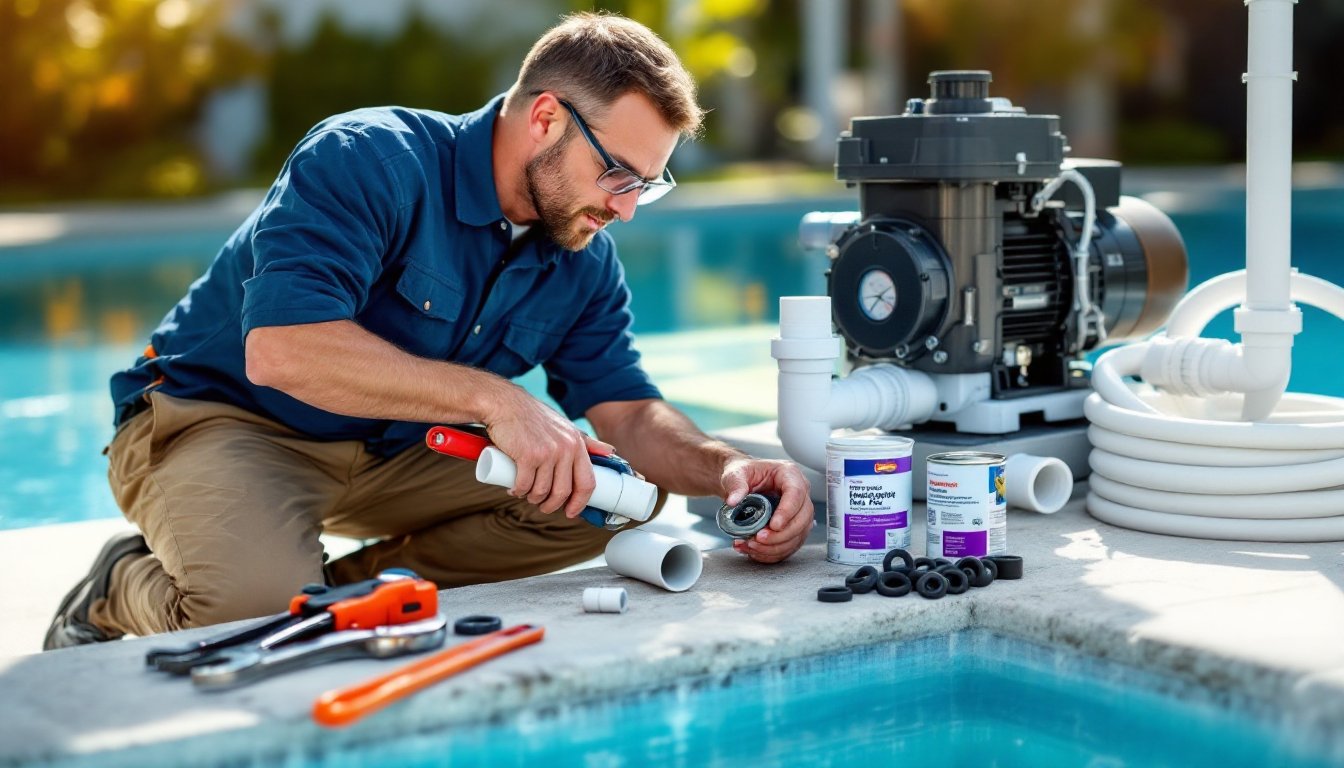
Above-ground repairs typically involve unions, valves, or pump connections. Turn off the pump, relieve pressure by opening the air relief valve on the filter, and inspect each fitting. Threaded unions often leak from worn O-rings, a $2 fix that takes five minutes. Unscrew the union collar, pop out the old O-ring, lubricate the new one with silicone-based lubricant (never petroleum jelly, which degrades rubber), and reassemble hand-tight plus a quarter turn with a strap wrench.
Cracked PVC fittings require replacement. Cut out the damaged section with a hacksaw or PVC cutter, leaving enough room to install a coupling or union. Dry-fit first, then apply PVC primer (purple or clear) followed by PVC cement to both surfaces. Push together with a quarter-twist and hold for 30 seconds. Wait at least two hours before pressurizing, longer in cold weather.
Underground leaks are trickier. Professional leak detection using pressure testing or acoustic equipment typically costs $200-$500 but saves digging up the entire yard. According to data from HomeAdvisor, professional pool plumbing repairs average $500-$1,200 depending on access and damage extent. Once located, homeowners comfortable with excavation can expose the pipe, cut out the damaged section, and splice in a repair coupling. Always use Schedule 40 PVC rated for pressure, DWV (drain-waste-vent) pipe isn’t strong enough and will fail.
Safety note: Call 811 before digging to mark underground utilities. Even backyard pools may have gas, electric, or communication lines nearby.
Clogged or Blocked Lines
Restricted flow shows up as weak jets, slow filtration, or pump cavitation (a grinding, rattling noise). Start diagnostics at the skimmer and main drain.
Skimmer blockages are usually debris-related. Remove the skimmer basket and weir door, then inspect the throat, the pipe opening where water enters. A wet/dry shop vac can pull out leaves or small toys lodged just inside. For deeper clogs, a drain snake or blow bag (a rubber bladder that attaches to a garden hose and expands to clear blockages) works well. Regularly cleaning the pool drain prevents buildup that leads to clogged suction lines.
If the blockage is in the main line between skimmer and pump, shut off power, close the skimmer valve, and disconnect the union at the pump. Thread a plumber’s snake or drain cable into the pipe from the pump end, working it forward while rotating. Expect resistance at 90-degree elbows, those are common catch points.
Return line clogs are less frequent but happen, especially in older systems where calcification or debris accumulates. These require working backward from the jets. Remove the jet fittings (usually threaded) and snake from the pool side toward the equipment. A pressure washer with a sewer jetting attachment can blast through mineral deposits, but use caution, too much pressure can crack fittings.
Filter and pump basket maintenance prevents most flow issues. Clean skimmer and pump baskets weekly, and backwash or clean the filter when pressure rises 8-10 PSI above baseline. Proper pump maintenance extends equipment life and keeps circulation optimal.
Tools and Materials You’ll Need for Pool Plumbing Repairs
Having the right gear on hand turns a frustrating repair into a manageable afternoon project. Here’s what to stock:
Tools:
- PVC cutter or hacksaw – clean cuts prevent weak joints
- Strap wrench or adjustable wrench – for unions and threaded fittings without marring plastic
- Wet/dry shop vac – pulls water from lines and retrieves debris
- Drain snake or plumber’s cable – 25-foot minimum for most residential pools
- Tape measure and permanent marker – accurate measurements prevent short cuts
- Utility knife – for trimming pipe ends and removing burrs
- Safety glasses and nitrile gloves – primer and cement are harsh on skin and eyes
Materials:
- Schedule 40 PVC pipe – match existing diameter (1.5″ or 2″ typical)
- PVC primer and cement – buy fresh: old cement doesn’t bond properly
- Couplings, elbows, and unions – keep a few common sizes on hand
- O-rings – universal pump union sizes (1.5″, 2″, 2.5″)
- Silicone lubricant – for O-rings and gaskets
- Teflon tape – for threaded connections (wrap clockwise, 3-4 wraps)
- Blow bag or expansion plug – for clearing clogs without chemicals
Many hardware stores sell PVC in 10-foot lengths, but some will cut to size. Nominal dimensions differ from actual: a 2-inch pipe actually measures about 2.375 inches OD (outside diameter). Fittings are sized by the nominal pipe size they accept.
For leak detection, a simple dye test kit (red or dark food coloring works) can pinpoint small cracks. With the pump off and water still, squirt dye near suspected leak points and watch for suction pulling the color into the crack.
When to Call a Professional vs. DIY Repairs
Some pool plumbing repairs are weekend-friendly, while others require licensed expertise. Here’s how to decide.
DIY-friendly repairs:
- Replacing O-rings, gaskets, or pump baskets
- Clearing skimmer and surface clogs
- Fixing above-ground PVC leaks at unions or valves
- Replacing pressure gauges or air relief valves
- Backwashing filters and routine line flushing
These tasks require basic tools and carry low risk of making things worse. Following manufacturer instructions and taking photos during disassembly helps ensure correct reassembly.
Call a professional when:
- Underground leaks are suspected but not located. Professionals use pressure testing and acoustic equipment to pinpoint leaks without destructive digging. Costs for locating and repairing underground pool plumbing issues typically range from $500 to over $1,200, depending on complexity.
- Main drain work is needed. Working on main drains involves entrapment hazards and must comply with the Virginia Graeme Baker Pool and Spa Safety Act (VGB Act). Many jurisdictions require licensed pool contractors for this work.
- Structural or load-bearing concerns arise. If a leak has caused soil erosion under the deck or pool shell, a structural engineer may need to assess stability before repairs proceed.
- Electrical integration is involved. Pool systems with automated controls, heaters, or lighting require work that meets National Electrical Code (NEC) Article 680 standards. Licensed electricians should handle any wiring.
- You’re uncomfortable with the scope. If a repair feels beyond your skill level, there’s no shame in hiring out. A botched DIY job often costs more to fix than the original professional estimate.
Some repairs blur the line. Replacing a short section of exposed return line is straightforward for a handy homeowner. But if that section is under a concrete deck, the job involves demolition, excavation, proper backfill, and deck repair, tasks better suited for professionals unless you have excavation experience and the right tools. Many pool owners find that partnering with reliable plumbing services for complex diagnostics while handling routine maintenance themselves strikes the right balance.
Permit considerations: Most cosmetic pool repairs don’t require permits, but anything involving structural changes, gas lines, or electrical work typically does. Code requirements vary by jurisdiction, check with the local building department before starting major work. Unpermitted work can complicate insurance claims and home sales down the road.
For guidance on common plumbing fixes that translate to pool systems, Family Handyman’s pool leak repair guide offers visual walkthroughs of detection and repair techniques. Understanding basic pipe repair principles also helps when tackling pool plumbing challenges.