Most homeowners don’t think about electrical maintenance until something stops working, or worse, starts sparking. But the electricians who keep commercial buildings humming are the same pros who can prevent house fires, save you from panel overloads, and spot code violations before they turn into insurance headaches. An electrical maintenance technician isn’t just for factories and office parks: they’re the specialist you call when you need more than a simple outlet swap. Whether you’re troubleshooting flickering lights, planning a service upgrade, or just want a second opinion on your aging panel, understanding what these technicians do, and what they cost, helps you make smarter, safer decisions for your home.
Table of Contents
ToggleKey Takeaways
- An electrical maintenance technician specializes in proactive upkeep and diagnostics using tools like thermal cameras and insulation testers to catch problems like loose connections and code violations before they become safety hazards.
- Homes built before 1990, those with EV chargers or smart home systems, and properties with recurring electrical issues should schedule maintenance every 3–5 years to prevent costly repairs and fire risks.
- Warning signs like flickering lights during high-draw appliance use, tripped breakers, warm outlets, and buzzing sounds require a professional inspection, as roughly 24,000 residential fires annually stem from preventable electrical failures.
- Hire a journeyman or master electrician with verified licensing, insurance, and references who provides written diagnostic reports and uses advanced thermal imaging during their thorough 1–3 hour maintenance visits.
- A diagnostic inspection and panel maintenance typically costs $150–$400 in 2026, with thermal imaging adding $100–$200, while homeowners can safely perform monthly GFCI testing and visual inspections but must leave panel work to licensed professionals.
What Does an Electrical Maintenance Technician Do?
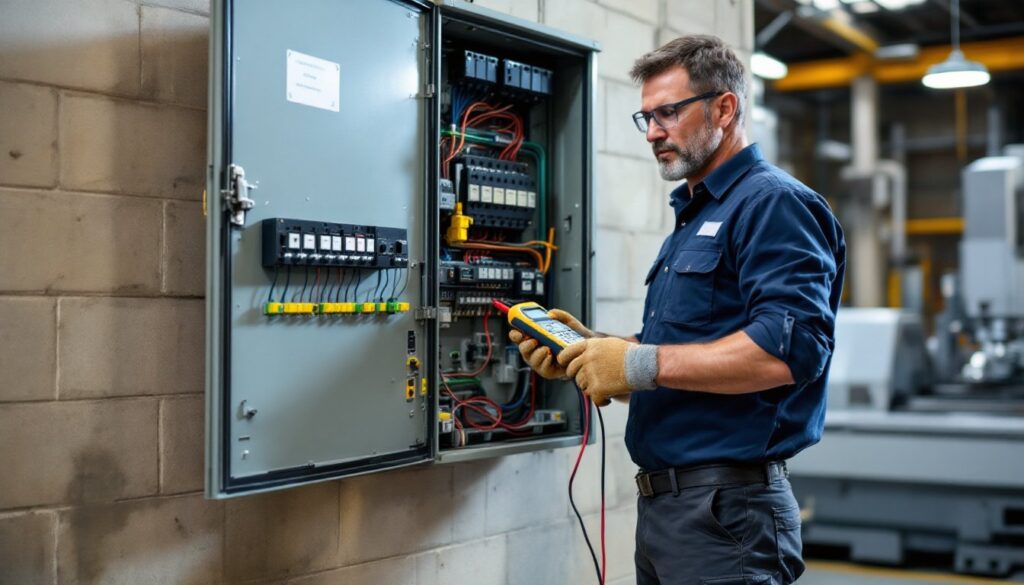
An electrical maintenance technician focuses on the upkeep, inspection, and repair of electrical systems, not just installations. While a licensed electrician can handle both new work and maintenance, technicians specializing in maintenance bring diagnostic skills honed in commercial or industrial settings, where downtime costs thousands per hour.
In a residential context, they handle tasks like:
- Panel inspections and thermal imaging to spot hot spots, loose connections, or degraded breakers before they fail
- Circuit testing and load balancing to prevent overloads, especially in older homes with undersized panels (100-amp services are common in pre-1980s builds)
- GFCI and AFCI testing to ensure ground-fault and arc-fault protection meets current NEC (National Electrical Code) requirements
- Troubleshooting intermittent faults, like lights that flicker only when the HVAC kicks on, or outlets that work inconsistently
- Scheduled preventive maintenance on standby generators, transfer switches, and whole-home surge protectors
- Infrared scans of panels and connections, catching problems invisible to the naked eye
Unlike a service call for a single broken fixture, maintenance visits are proactive. Technicians document findings, recommend upgrades, and create a maintenance schedule, useful if you’re managing a multi-unit property or a home with high electrical demands (EV chargers, workshops, server racks).
Many maintenance techs hold the same journeyman or master electrician licenses required by state and local codes, but they lean heavily on diagnostic tools: multimeters, clamp meters, insulation testers, and thermal cameras. If your municipality follows the 2023 or 2026 NEC, expect them to be current on AFCI requirements for most 15A and 20A circuits.
When Should Homeowners Hire an Electrical Maintenance Technician?
You don’t need a maintenance tech for every burnt-out bulb. But several scenarios justify the call, especially if you’re dealing with recurring issues, aging infrastructure, or major appliance additions.
Routine maintenance visits make sense:
- Every 3–5 years for homes built before 1990, especially those with original panels, aluminum wiring, or ungrounded circuits
- Before and after major appliance installs, like EV chargers (typically 40–50 amps), hot tubs, or workshop equipment
- When selling or buying a home, to catch deferred maintenance or code violations that’ll show up in inspections
- After storms or power surges, even if everything seems fine, hidden damage to surge protectors, GFCI devices, or panel buses can surface later
Smart home systems have added complexity, too. Homes with integrated lighting, security cameras, and automation hubs benefit from electrical maintenance that verifies low-voltage wiring integrity and power supply stability. A tech can ensure your network switches and PoE devices aren’t drawing more than circuits can handle long-term.
Warning Signs Your Home Needs Electrical Maintenance
Call a maintenance technician if you notice:
- Flickering or dimming lights when high-draw appliances (HVAC, dryer, microwave) turn on, suggests loose neutral or undersized service
- Breakers that trip repeatedly, especially if resetting them “fixes” the problem temporarily
- Warm or discolored outlets and switch plates, a sign of arcing, backstabbed connections, or overloaded circuits
- Buzzing or crackling sounds from panels, outlets, or switches
- Burning smell with no obvious source, particularly near the panel or in walls
- GFCI or AFCI breakers that won’t reset, or do so only intermittently
- Outlets that don’t hold plugs firmly, indicating worn contacts and potential arcing
- Aluminum branch wiring (common in 1960s–70s builds) without proper connectors or anti-oxidant paste
Any of these can escalate from annoyance to fire hazard. The U.S. Fire Administration attributes roughly 24,000 residential fires annually to electrical failures, most preventable with proper maintenance.
How to Find and Hire a Qualified Electrical Maintenance Technician
Start with licensing. Every state requires electricians to be licensed: most distinguish between apprentice, journeyman, and master levels. For maintenance work, hire a journeyman or master electrician, they have the authority to work independently and pull permits if needed.
Verify credentials:
- State license number (searchable on your state contractor board’s website)
- Liability and workers’ comp insurance, ask for certificates and call to confirm coverage is active
- Local permits, if the work involves panel upgrades or circuit additions (even maintenance can require permits in some jurisdictions)
Ask for references and check online reviews, but be specific: look for feedback on diagnostic work, not just installations. A tech who troubleshoots well explains findings clearly and provides written reports.
Get three quotes for non-emergency work. Quotes should itemize labor, materials, and any permit fees. Beware of “free inspection” offers that waive the trip charge only if you commit to repairs on the spot, it’s a high-pressure tactic.
When comparing candidates, ask:
- What diagnostic tools do you use? (Thermal cameras and insulation testers are marks of a thorough pro.)
- Do you provide a written report? Documentation matters for insurance, resale, and future work.
- What’s your policy on code upgrades? Some jurisdictions require bringing circuits up to current NEC when you touch them: confirm who pays for that.
- Are you familiar with smart home electrical systems? If you have automation, low-voltage networks, or PoE devices, you want someone who won’t dismiss them as “just IT stuff.”
For scheduled maintenance, ask if they offer annual service contracts, common in commercial settings, less so residential, but worth it if you have a generator, solar inverter, or EV charger.
What to Expect During an Electrical Maintenance Visit
A thorough maintenance visit isn’t a 15-minute panel glance. Plan for 1–3 hours depending on home size and system complexity.
Here’s the typical workflow:
-
Initial walkthrough and interview. The tech asks about problem areas, recent work, and appliance additions. Mention flickering, tripped breakers, or warm outlets.
-
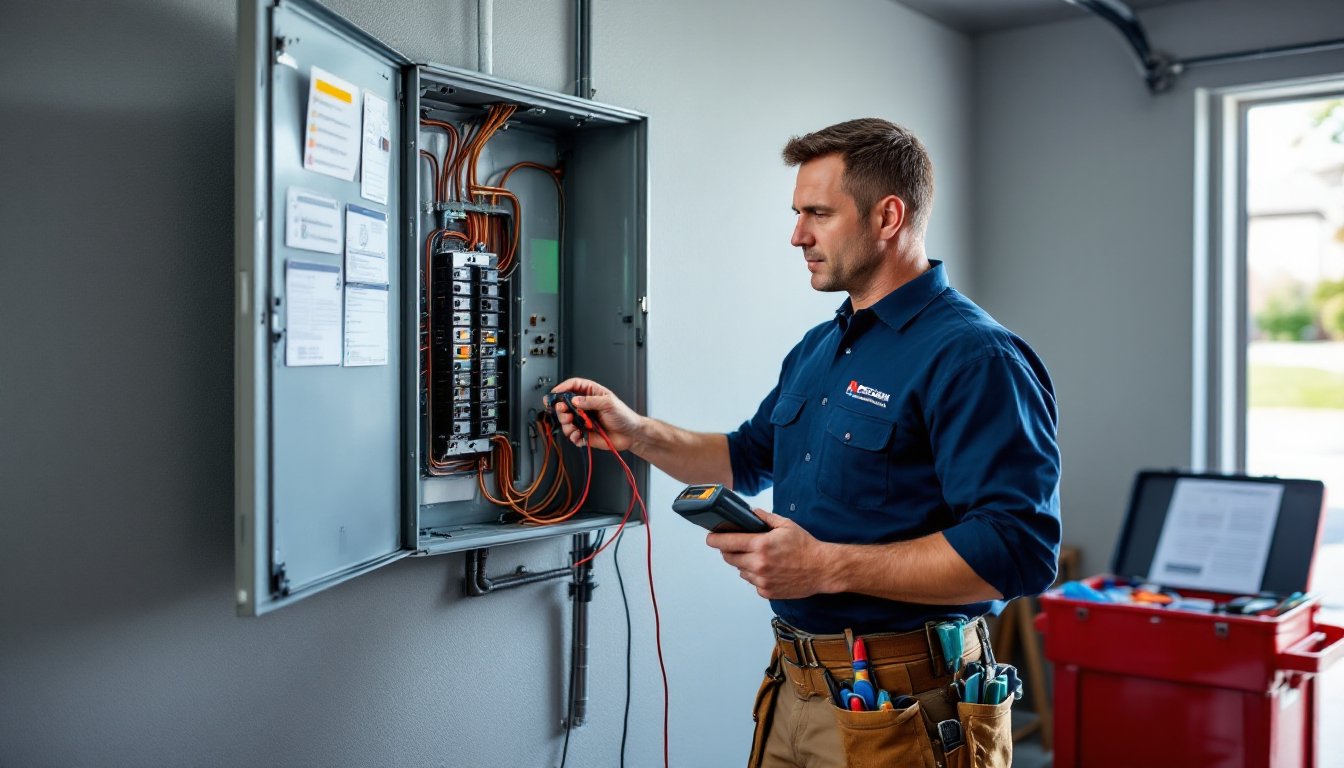
Panel inspection. They’ll open the cover (dead-front) and check for:
- Proper torque on bus connections and breaker terminals
- Signs of arcing, corrosion, or overheating
- Correct breaker ratings for wire gauges (14 AWG = 15A max, 12 AWG = 20A max)
- Double-tapped breakers (two wires under one terminal, a code violation unless the breaker is rated for it)
- Missing AFCI or GFCI protection where required
-
Thermal imaging. Using an infrared camera, they scan the panel and visible outlets for hot spots. Temperature differences of 10–15°F can indicate failing connections.
-
GFCI/AFCI testing. Every GFCI outlet and breaker gets a push-button test: AFCI breakers are tested with a specialized tool to verify they trip on arc faults.
-
Outlet and switch sampling. They test a representative sample (not every single one, unless you pay for it) for proper grounding, polarity, and GFCI protection in wet areas (kitchen, bath, garage, exterior).
-
Load calculation (if requested). For homes adding EV chargers or large appliances, they calculate existing load against service capacity to determine if an upgrade from 100A to 200A is necessary.
-
Written report. Good techs provide a summary: issues found, recommended repairs, code compliance notes, and a priority ranking (critical/recommended/optional).
You’ll usually need to provide clear access to the panel, attic, and crawlspace. If the panel’s in a cluttered garage or behind stored boxes, clear it beforehand. The tech should bring all tools and PPE: you don’t need to supply anything.
Cost Breakdown: Electrical Maintenance Services in 2026
Pricing varies by region, but here are 2026 national averages for common maintenance tasks. Expect higher rates in metro areas and lower in rural zones: West Coast and Northeast markets run 20–40% above these figures.
- Diagnostic visit/inspection: $150–$300 for the first hour, including a basic panel check and outlet sampling. Thermal imaging adds $100–$200.
- Panel maintenance (tightening connections, cleaning, testing all breakers): $200–$400.
- GFCI/AFCI device testing (whole-house): $100–$250, depending on device count.
- Load calculation and report: $150–$350, often bundled with inspections if you’re planning an EV charger or service upgrade.
- Annual maintenance contract: $300–$600/year for one or two visits, priority scheduling, and discounted repair rates.
Repairs found during maintenance are billed separately:
- Replacing a failed GFCI outlet: $75–$150 per device
- Tightening or replacing a breaker: $50–$150
- Panel upgrade (100A to 200A): $1,500–$4,000, depending on service mast, meter base, and permit requirements
Trip charges (usually $50–$100) apply for standalone visits: most companies waive it if you proceed with repairs.
Note: Costs fluctuate with copper prices, permit fees (typically $50–$200 for electrical work), and local labor rates. Always get a written estimate before authorizing work beyond the initial inspection.
DIY Electrical Maintenance vs. Hiring a Professional
Homeowners can, and should, handle basic electrical upkeep, but know the line between maintenance and licensed work.
Safe DIY tasks:
- Monthly GFCI testing: Press the test button on GFCI outlets and breakers: they should trip immediately. Press reset to restore power. If they don’t trip or won’t reset, call a pro.
- Visual panel inspection: With the panel cover on, look for scorch marks, rust, or moisture. Never remove the dead-front unless you’re a licensed electrician.
- Outlet testing: Use a plug-in circuit tester ($5–$15) to check for proper grounding and polarity. Available at any hardware store: three-light indicators show wiring faults at a glance.
- Tightening visible cover plates and ensuring outlets hold plugs snugly (if they don’t, replacement is a simple DIY, kill the breaker first).
- Checking for warm outlets or switches: Touch them periodically. Warmth indicates a problem, shut off the circuit and call a tech.
Leave to the pros:
- Anything inside the panel, including breaker replacement, bus bar work, or tightening lugs. Even with the main breaker off, the service lugs remain energized at 240V.
- Troubleshooting intermittent faults that require load testing, insulation resistance checks, or thermal imaging.
- AFCI breaker testing, which needs specialized equipment to simulate arc faults.
- Aluminum wiring remediation, requires anti-oxidant compounds and special connectors.
- Any work that requires a permit (varies by jurisdiction, but often includes new circuits, panel swaps, or service upgrades).
Reviews on home technology and automation systems highlight another DIY limit: low-voltage wiring for smart home devices is generally safe to install, but ensuring adequate circuit capacity for the power supplies and hubs often requires professional load assessment.
Safety note: Always de-energize circuits at the breaker, verify with a non-contact voltage tester, and use insulated tools. If you’re uncomfortable or uncertain, the service call is cheaper than a shock injury or fire.