Tired of wrestling with tangled hoses and dragging heavy equipment around your pool deck? Cordless pool vacuums have come a long way since their early days, and in 2026, they’re genuinely viable alternatives to traditional tethered models. Whether you’re managing a 15,000-gallon in-ground pool or a smaller above-ground setup, understanding what these battery-powered cleaners can, and can’t, do will save you both time and frustration. This guide walks through everything a pool owner needs to know, from how these machines actually operate to picking the right model and keeping it running smoothly season after season.
Table of Contents
ToggleKey Takeaways
- A cordless pool vacuum operates independently with a rechargeable lithium-ion battery and integrated pump, offering runtimes from 30 minutes to 90+ minutes depending on the model.
- Cordless pool vacuums eliminate tangled hoses and reduce strain on your main filtration system, making them ideal for quick spot cleaning, smaller pools, and regular weekly maintenance.
- Battery life, suction power (15-20 GPM minimum), debris capacity, and filtration quality are the most critical features when selecting the best cordless pool vacuum for your needs.
- Proper maintenance—including emptying filters after each use, inspecting seals monthly, and storing indoors at 50-60% battery charge—extends equipment lifespan by 2-3 seasons or more.
- While cordless vacuums excel at touchups and smaller pools, large in-ground pools (25,000+ gallons) with heavy seasonal debris may still benefit from a corded robotic cleaner as the primary cleaning workhorse.
What Is a Cordless Pool Vacuum and How Does It Work?
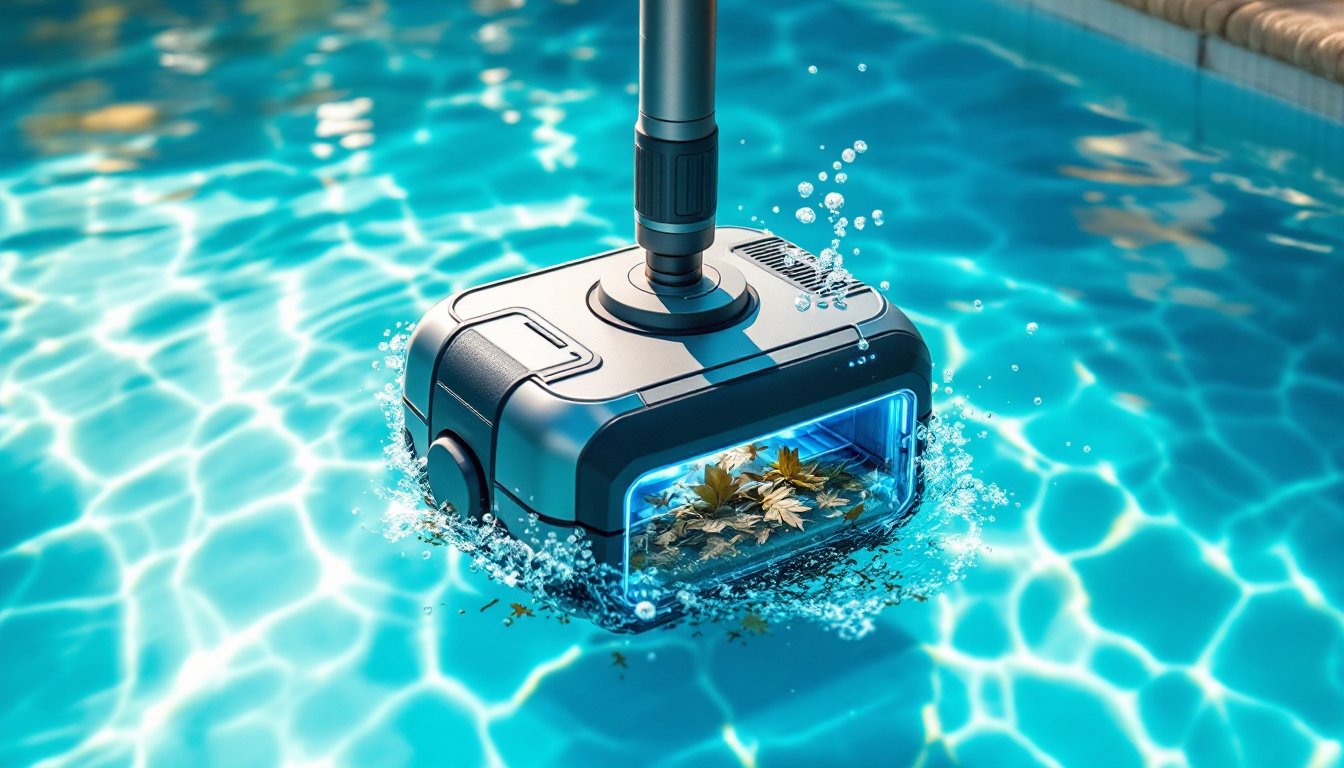
A cordless pool vacuum is a self-contained cleaning device powered by a rechargeable battery instead of relying on your pool’s filtration system or a trailing power cord. Unlike suction-side or pressure-side cleaners that hook into existing plumbing, or robotic models that plug into an outlet, a cordless pool vacuum cleaner operates completely independently.
Most models use an integrated pump and filter cartridge or debris bag. The onboard motor creates suction, pulling dirt, leaves, sand, and small debris through an intake nozzle. Captured material gets trapped in a reusable filter or bag you’ll empty after each session. The battery pack, typically lithium-ion, sits in a sealed, waterproof housing. Runtime varies widely, from 30 minutes on budget units to 90+ minutes on premium models.
There are two main categories: handheld cordless vacuums and robotic cordless vacuums. Handheld units resemble underwater stick vacuums. The operator guides them manually along pool surfaces, offering precision for spot cleaning stairs, coves, and around fixtures. Robotic cordless models navigate autonomously, using internal algorithms or basic sensors to map the pool floor and walls, much like their corded robotic cousins but without the tether.
Both types rely on sealed electronics and motors rated for submersion. Battery packs are designed with safety circuits to prevent short circuits or thermal runaway when submerged. The filtration is simpler than a traditional pool filter, think mesh bags or pleated cartridges rather than sand or DE media, but it’s sufficient for routine maintenance between deeper cleans.
Why Choose a Cordless Pool Vacuum Over Traditional Models?
Portability and convenience top the list. Without hoses or cords, setup takes seconds. Grab the unit, drop it in the pool, and start cleaning. There’s no priming hoses, no adjusting flow valves, and no untangling 40 feet of kinked tubing. For above-ground pools or situations where the equipment pad is far from the pool, this is a game-changer.
No drain on your filtration system. Suction-side cleaners increase wear on your pool pump and filter, and they often require the pump to run continuously during cleaning. Cordless models operate independently, so your main filter can rest or run on its normal schedule. This can extend pump life and reduce energy costs, especially if you’re running a variable-speed pump optimized for circulation rather than vacuuming.
Spot-cleaning power. Spilled snacks around the spa steps? Pine needles clustered in one corner after a storm? A handheld cordless vacuum handles these messes immediately without a full cleaning cycle. Traditional robotic pool cleaners are overkill for quick jobs and take time to deploy.
Easier winterization and storage. Cordless units are compact. Most fit in a garage cabinet or shed without dedicated wall mounts or hose reels. There’s no need to drain long hoses or worry about freeze damage to plumbing connections.
That said, they’re not perfect for every scenario. Battery runtime limits how much area you can clean in one go. If you’ve got a large in-ground pool, say, 25,000 gallons or more, a best pool robot vacuum with unlimited corded runtime might still be more efficient for whole-pool cleaning. Cordless models shine for regular touchups, smaller pools, and situations where mobility matters more than marathon cleaning sessions.
Homeowners managing seasonal algae or heavy leaf loads will still want a full-bore robotic or pressure-side cleaner as the primary workhorse. Think of cordless vacuums as a supplement, not a replacement, for those demanding environments. But for weekly maintenance and quick intervention, they’re tough to beat.
Key Features to Look for When Buying a Cordless Pool Vacuum
Not all cordless vacuums are created equal. Here’s what separates the best cordless pool vacuum models from the rest.
Battery Life and Charging Time
Runtime is the most critical spec. Entry-level units offer 30–45 minutes, which is enough for an 800–1,000 sq. ft. pool floor if you work efficiently. Mid-tier models push 60–75 minutes. Premium options hit 90 minutes or more, and some include swappable battery packs so you can charge one while using the other.
Pay attention to charging time. A vacuum that takes 6–8 hours to recharge after a 40-minute session is frustrating if you need to clean twice in one day. Look for models with 3–4 hour charge cycles or fast-charge technology. Lithium-ion chemistry is standard: avoid older NiMH batteries, which suffer from memory effect and shorter lifespans.
Check whether the battery is user-replaceable. After 300–500 charge cycles (roughly 2–3 seasons of regular use), capacity degrades. If the battery is sealed into the unit, you’re looking at a costly manufacturer service or total replacement.
Suction Power and Debris Capacity
Suction is measured in watts or gallons per minute (GPM), though manufacturers don’t always publish standardized figures. A good rule of thumb: units pulling at least 15–20 GPM handle sand, silt, small pebbles, and organic debris effectively. Anything less struggles with fine sediment.
Debris capacity ranges from 1.5 to 4 liters. Smaller bags fill quickly if you’re vacuuming a heavily soiled pool, forcing you to pause mid-session to empty and rinse. Larger capacity means fewer interruptions but adds weight and bulk. For weekly maintenance, 2–3 liters is the sweet spot.
Look for multi-layer filtration. Basic mesh bags (100–200 micron) catch leaves and large particles but let fine dust pass through. Better models include pleated cartridges or dual-stage filters down to 50 microns, capturing algae spores and silt that would otherwise cloud the water.
Brush rolls or scrubbing pads are a plus for gunite or pebble-finish pools. Algae and biofilm cling to textured surfaces: suction alone won’t dislodge them. Rotating brushes agitate as they vacuum, similar to an upright carpet cleaner. For vinyl or fiberglass, soft nylon bristles prevent scratching.
Telescoping poles and handle ergonomics matter for handheld models. Standard pool poles (8–16 ft. telescoping aluminum) attach via universal clips on most units. If the vacuum doesn’t include a pole, budget an extra $20–40 for one. Rubberized grips and swivel heads reduce arm fatigue during longer sessions.
For autonomous best pool vacuum robot models, check for obstacle detection and navigation patterns. Basic units bump randomly until the battery dies: smarter ones use gyroscopes or simple mapping to avoid getting stuck in corners or missing large sections. Wall-climbing capability is rare in cordless robotics due to power constraints, but a few 2026 models manage it for short bursts.
Finally, consider warranty and support. A 1-year warranty is baseline: 2 years is better. Read reviews on actual customer service responsiveness, pool season waits for no one, and a vacuum that breaks in June and takes six weeks to repair is useless.
How to Use and Maintain Your Cordless Pool Vacuum
Before first use, fully charge the battery per the manufacturer’s instructions, often 4–6 hours for the initial cycle. This conditions the cells for optimal performance. Check that all seals, latches, and gaskets are properly seated. A flooded battery compartment voids most warranties and creates a safety hazard.
Skim surface debris before vacuuming. Leaves and twigs floating on top will sink as you work, clogging the intake or filling the bag prematurely. Use a leaf skimmer to clear the surface, then proceed with vacuuming the floor and walls.
Work in overlapping passes, like mowing a lawn. For handheld models, start at the shallow end and work toward the deep end, moving the vacuum slowly, about 1 foot per second. Rushing reduces suction efficiency and misses debris. For steps and corners, angle the nozzle to get into crevices.
With autonomous models, place the unit in the water per the manual (usually deep end, centered), power it on, and let it run. Most have indicator lights showing battery status and operation mode. Don’t lift it out mid-cycle unless necessary: some units lose their navigation progress and restart the pattern.
Empty and rinse the filter or debris bag after every session. Leaving wet debris to sit promotes mold and odors. Rinse the bag or cartridge with a garden hose until water runs clear. For stubborn grime, soak in a bucket with a capful of dish soap, then rinse thoroughly. Let it air-dry completely before storing.
Inspect seals and O-rings monthly. These rubber or silicone gaskets keep water out of electronics. Look for cracks, compression set (permanent flattening), or debris stuck in the groove. Apply a thin coat of silicone grease (not petroleum-based) to keep them supple. Replace them annually or per the maintenance schedule, whichever comes first.
Store the vacuum indoors when not in use. UV exposure degrades plastic housings and shortens battery life. A garage, shed, or pool equipment room works. If storing for winter, charge the battery to about 50–60% (not full, not empty) and disconnect it if possible. Extreme cold or heat accelerates capacity loss.
Descale or clean internal components if your water is hard or has high mineral content. Calcium deposits can clog intake screens and impellers. Soak removable parts in white vinegar or a commercial descaling solution once per season. Consult your manual for disassembly instructions, some units aren’t user-serviceable beyond the filter.
For those managing broader pool care routines, integrating cordless vacuums into a weekly maintenance schedule keeps small messes from becoming major cleaning projects.
Common Issues and Troubleshooting Tips
Weak or no suction is the most frequent complaint. First, check the debris bag or filter, if it’s clogged, airflow drops. Empty and rinse it. Inspect the intake nozzle for blockages like leaves or pine needles wedged in the screen. On handheld models, a worn impeller (the spinning fan that creates suction) can lose efficiency after heavy use. Some units have replaceable impellers: others require factory service.
Short battery runtime signals either a degraded battery or a power-hungry fault. If the vacuum is older than two seasons and runtime has gradually decreased, the battery’s likely at end-of-life. If runtime suddenly drops, check for a stuck impeller or brush roll drawing excess current. Power off, inspect for debris jamming moving parts, and clear it.
Unit won’t power on. Confirm the battery is charged and properly seated. Check the power switch, some models have safety interlocks that prevent operation if the debris compartment isn’t fully closed. If the unit took a hard drop, internal connections may have jarred loose. This usually requires professional repair.
Vacuum sinks or won’t stay afloat (on models designed to float). This indicates water intrusion or a damaged float chamber. Stop using it immediately, submersion of unsealed electronics is a shock risk and will destroy the motor. Dry it out, inspect seals, and contact the manufacturer. Don’t attempt further use until repaired.
Autonomous models getting stuck in the same spot repeatedly means the navigation logic is confused. Obstacles like main drains, return fittings, or sharp pool contours can trap simple bump-and-go algorithms. Manually reposition the vacuum to a different starting point. If it happens constantly, the pool shape may not suit that model, consider a manual handheld or a corded robotic with better sensors.
Loud grinding or rattling noises suggest a damaged impeller, foreign object in the motor housing, or failing bearings. Stop use and inspect. Running a damaged motor risks burning out the windings, turning a small repair into a total loss.
Cloudy water after vacuuming. If the filter’s mesh is too coarse or damaged, fine particles pass through and get stirred back into the pool. Upgrade to a finer micron filter or replace a torn bag. For pools with persistent algae or silt, a deep cleaning approach may be necessary before a cordless vacuum can maintain clarity.
Many homeowners find that integrating insights from seasonal home maintenance guides helps them anticipate and prevent these issues before they interrupt pool season.
Manufacturer resources matter. Before buying, check if the brand offers downloadable manuals, video tutorials, and accessible parts. Some newer brands have robust support: others disappear after a year. Independent testing by consumer labs often highlights which models hold up under real-world conditions and which ones develop chronic issues. Reviews from sources like Good Housekeeping’s pool vacuum tests provide valuable long-term performance data.
Final thought: cordless pool vacuums won’t replace all your cleaning tools, but they fill a crucial niche. For quick cleanups, spot maintenance, and avoiding the hassle of hoses, they’re hard to beat in 2026. Choose a model that matches your pool size and debris load, maintain it properly, and you’ll spend more time swimming and less time wrestling with equipment. And when in doubt, consult trusted home improvement resources like The Spruce for additional pool care strategies and product recommendations.