Building a deck around an above ground pool doesn’t have to drain the savings account. With smart material choices and a little DIY grit, homeowners can create a functional, attractive poolside platform for a fraction of what custom installers charge. The key is understanding which corners to cut, and which ones deserve the investment. This guide walks through budget-conscious deck ideas, material options, and money-saving techniques that deliver professional-looking results without the professional price tag.
Table of Contents
ToggleKey Takeaways
- Above ground pool deck ideas on a budget are achievable with pressure-treated wood costing $2 to $5 per linear foot, making it the most cost-effective material choice for DIY builders.
- A partial surround or corner deck design cuts material costs in half compared to a full wraparound while still providing safe access and functional poolside space.
- Composite and recycled decking materials eliminate annual staining maintenance but require a pressure-treated substructure to keep structural costs down.
- Buying lumber in bulk during off-season months and renting specialized tools rather than purchasing can save hundreds of dollars on above ground pool deck construction.
- Simple finishing touches like solar deck lights ($15–$30), outdoor rugs, and DIY privacy screens create professional visual impact without significantly increasing the budget.
- Proper deck height at or just below the pool’s top rail (48–54 inches) and standard 16-inch joist spacing ensures code compliance and structural safety while minimizing waste.
Why Add a Deck to Your Above Ground Pool?
An above ground pool deck solves three practical problems at once: access, safety, and aesthetics. Without a proper platform, swimmers use flimsy ladders that wobble under weight and create trip hazards. A well-built deck provides stable entry and exit points, reducing the risk of slips and falls, especially important for kids and older adults.
Decks also tie the pool into the yard’s overall design. A bare above ground pool stands out like a giant tub plunked on the lawn. Add a surrounding deck, and suddenly it becomes an integrated outdoor living space where people actually want to hang out.
From a property value standpoint, a clean deck installation can boost curb appeal and marketability. Buyers see a finished project, not a DIY afterthought. Even budget builds look professional when framed correctly and finished with attention to detail.
Finally, decks create usable square footage around the pool for lounging, setting down drinks, or supervising swimmers. That extra real estate turns a pool into a true backyard gathering spot rather than just a place to cool off.
Budget-Friendly Deck Materials That Won’t Break the Bank
Pressure-Treated Wood: The Classic DIY Choice
Pressure-treated lumber remains the most cost-effective decking material for above ground pool projects. Expect to pay roughly $2 to $5 per linear foot for 2×6 decking boards and $8 to $15 per post for structural framing, depending on regional pricing and lumber grades.
Southern yellow pine is the most common species for pressure-treated stock. It’s treated with preservatives that resist rot and insect damage, making it suitable for ground contact and wet environments. Use ground-contact rated lumber (labeled .40 or higher retention level) for any posts, joists, or beams within 6 inches of soil or in direct contact with the pool structure.
Pressure-treated wood requires annual maintenance, staining or sealing every 1 to 2 years to prevent weathering and splintering. Skip this step, and the deck will turn gray and rough within a couple seasons. For those willing to put in the upkeep, it’s the most affordable route to a functional deck. Many DIY platforms on Instructables detail straightforward pressure-treated builds that homeowners can tackle over a long weekend.
One downside: wet pressure-treated wood can be slippery. Install grooved or ribbed decking boards rather than smooth-faced stock to improve traction around the pool. Alternatively, add a textured stain or apply anti-slip deck strips to high-traffic areas.
Composite and Recycled Materials for Durability
Composite decking, made from recycled wood fiber and plastic, costs more upfront (roughly $3 to $8 per linear foot) but eliminates the annual staining cycle. These boards resist fading, splintering, and moisture damage, which makes them ideal for poolside applications where water exposure is constant.
Brands like Trex, TimberTech, and Fiberon offer budget-friendly lines that perform well in wet conditions. Look for capped composite boards with a protective polymer shell: uncapped versions absorb more water and are prone to mold in shaded areas.
Composite requires a pressure-treated or steel substructure, you can’t build the entire frame from composite due to load-bearing limitations. Frame the deck with treated joists and beams, then lay composite boards as the walking surface. This hybrid approach keeps structural costs down while upgrading the visible deck surface.
Another recycled option: reclaimed wood or pallet lumber. Some DIYers source free or cheap pallets, disassemble them, and mill the boards into decking. This works if the pallets are heat-treated (stamped HT, not chemically treated MB) and in good condition. It’s labor-intensive but can yield unique, rustic results for near-zero material cost. Just inspect each board carefully for splits, rot, or embedded nails before installation.
Simple Deck Designs That Maximize Value
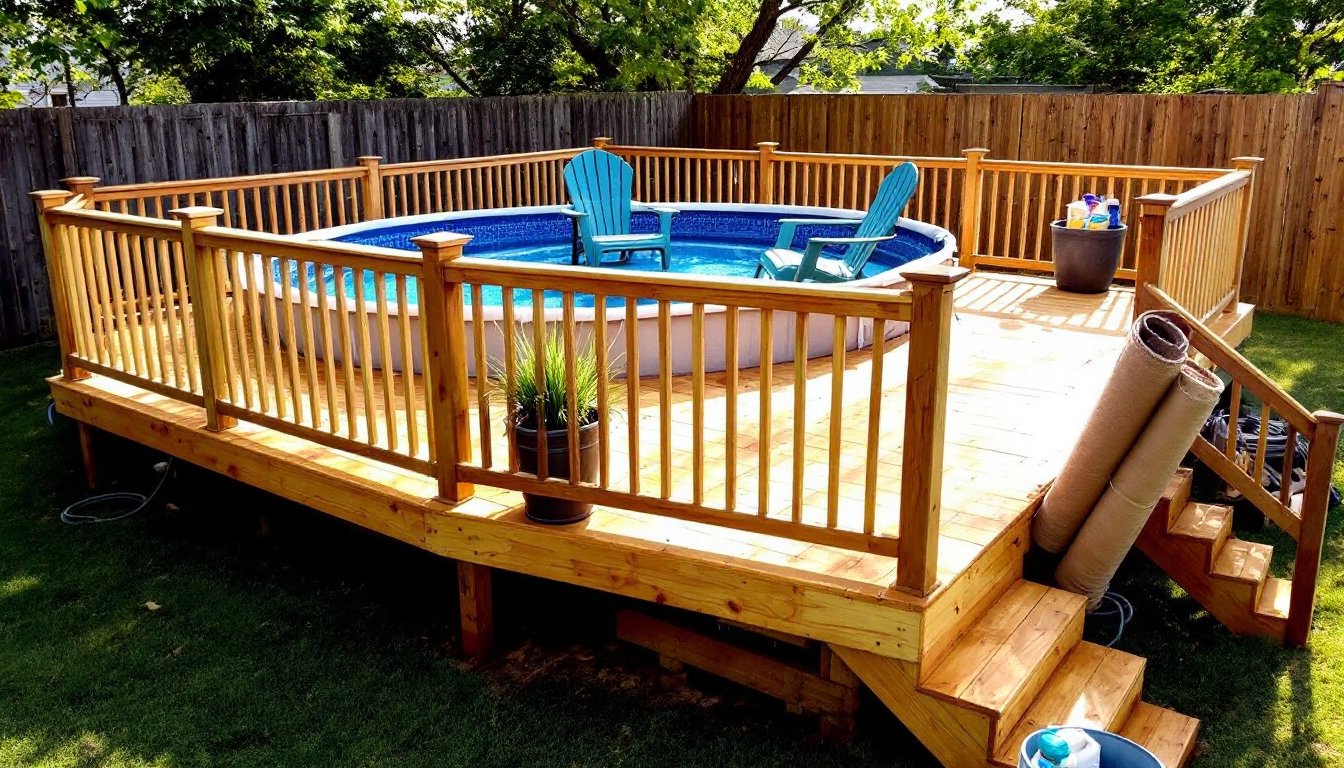
The simplest budget deck is a partial surround, a platform on one side of the pool with steps leading up from ground level. This design cuts material costs in half compared to a full wraparound and still provides safe access and a place to set pool gear. Position the deck on the side closest to the house or patio for convenience.
A corner or wedge deck is another space-efficient option. Build a triangular platform in one corner of the pool, just large enough for a ladder and a couple of lounge chairs. This minimizes lumber use while creating a defined entry point.
For pools positioned against a fence or property line, consider a single-side deck with integrated storage. Frame the deck with a lower tier underneath for stashing pool toys, chemicals, or a filter pump. This dual-purpose design adds function without increasing the deck’s footprint.
Keep the deck height at or just below the pool’s top rail, typically 48 to 54 inches off the ground for most above ground models. This allows swimmers to step directly onto the deck from inside the pool. If local codes require railings (typically for decks more than 30 inches above grade), budget for 4×4 posts and 2×2 balusters spaced no more than 4 inches apart per International Residential Code (IRC) guidelines. Railings add cost, but they’re non-negotiable for safety and code compliance in most jurisdictions.
Avoid complex angles, curves, or multi-level designs on a tight budget. Straight cuts and right angles minimize waste and keep construction straightforward. A basic rectangular or L-shaped platform uses lumber efficiently and goes together faster, saving both material and labor costs. Those tackling a deck build for the first time will find more detailed framing advice in resources like Bob Vila’s deck guides, which walk through joist spacing and beam sizing for various spans.
Money-Saving DIY Tips for Building Your Pool Deck
Buy lumber in bulk and off-season. Prices drop in fall and winter when demand slows. Order all framing lumber and decking at once to qualify for contractor pricing or bulk discounts at home centers. Some lumberyards will deliver for free or a flat fee if the order exceeds a minimum dollar amount.
Use standard joist spacing and beam spans. Stick to 16-inch on-center joist spacing for 2×6 or 2×8 joists, and size beams according to span tables in the IRC. Over-building wastes money: under-building risks structural failure and code violations. Consult a joist span calculator or the IRC deck section (R507) if unsure. Many municipalities require permits for decks over a certain height or size, check local building departments before starting. Skipping a required permit can result in fines and forced removal.
Rent specialized tools rather than buying. A power auger for digging post holes, a compound miter saw for angled cuts, and a pneumatic nailer for decking installation can all be rented by the day for $30 to $80 each. Renting beats buying if this is a one-time project. For fasteners, use galvanized or stainless steel screws and bolts to prevent rust staining on the deck surface. Standard deck screws cost around $8 to $12 per pound.
Reuse and repurpose materials where safe. Concrete deck blocks or precast footings ($5 to $10 each) work well for supporting posts in stable soil and eliminate the need for poured footings. In frost-prone regions, but, footings must extend below the frost line to prevent heaving, typically 36 to 48 inches deep. Check local frost depth requirements before choosing footing type.
Optimize board layout to minimize cuts and waste. Sketch the deck to scale and plan where each board will land. Standard lumber comes in 8-, 10-, 12-, and 16-foot lengths. If the deck is 12 feet wide, use 12-foot boards and avoid seams. Leftover cutoffs from framing can often be used for blocking, bracing, or small trim pieces.
Do your own finishing work. Staining, sealing, and installing railings are time-consuming but not technically complex. A gallon of exterior deck stain covers roughly 200 to 350 square feet and costs $25 to $50. Apply two coats for best protection. For those looking to maintain the deck long-term, integrating it into a broader pool maintenance routine ensures both the water and the structure stay in top shape.
Affordable Finishing Touches and Decor Ideas
Once the deck frame and surface are complete, small upgrades make a big visual impact without inflating the budget. Solar deck lights ($15 to $30 for a pack of six) install without wiring and provide soft illumination for evening swims. Mount them on railing posts or along the deck perimeter for safety and ambiance.
Outdoor rugs define seating areas and add comfort underfoot. Look for polypropylene rugs labeled for outdoor use, they resist mold and dry quickly after rain. Expect to pay $30 to $100 for a 5×7-foot rug. Position rugs away from the pool edge to avoid constant soaking.
Planters and container gardens soften the hard edges of a deck and tie it into the landscape. Use large resin or lightweight fiberglass planters ($20 to $60 each) filled with ornamental grasses, succulents, or trailing vines. Avoid terra cotta or ceramic pots, which crack in freezing temperatures. For design inspiration, Gardenista offers plenty of ideas for integrating greenery into outdoor spaces.
DIY privacy screens made from lattice panels, bamboo fencing, or repurposed pallets create seclusion without the cost of permanent fencing. Attach panels to the deck railing or mount them on posts at the deck’s edge. A 4×8-foot lattice panel runs $15 to $25 at most home centers. Stain or paint the screens to match the deck for a cohesive look.
Shade structures don’t have to be expensive. A simple cantilever umbrella ($80 to $200) provides adjustable coverage, or build a basic pergola frame from 4×4 posts and 2×6 rafters. Drape outdoor fabric or shade cloth over the rafters for a budget-friendly canopy. This setup costs $150 to $300 in materials and creates a defined lounging zone.
Finally, consider the long-term maintenance costs when planning the deck. Regular cleaning and sealing prevent costly repairs down the line. Homeowners juggling pool upkeep expenses should factor in deck maintenance as part of the overall backyard budget. For those aiming to keep things simple, choosing low-maintenance pool options and durable deck materials reduces the time and money spent on annual chores.
Small touches like hooks for towels, a built-in cooler niche, or a dedicated spot for a pool maintenance kit keep the deck organized and functional. These details don’t add much to the material list but make daily use more convenient. A well-planned deck also minimizes the need for frequent deep cleaning sessions, as debris has fewer places to collect when the area around the pool is elevated and finished properly.