Adding a pool to your backyard can turn ordinary weekends into resort-style getaways without leaving home. Whether you’re working with a sprawling lawn or a tight urban lot, there’s a pool design that fits your space, budget, and lifestyle. From classic gunite installations to above-ground options and natural swimming ponds, the choices have never been more diverse or accessible. This guide walks through practical pool ideas that balance aesthetics, function, and real-world costs, so you can make an well-informed choice and start planning your backyard transformation.
Table of Contents
ToggleKey Takeaways
- Backyard swimming pool ideas range from in-ground gunite and fiberglass ($40,000–$100,000+) to budget-friendly vinyl-liner and above-ground options ($2,000–$50,000), with each type offering different durability, customization, and maintenance trade-offs.
- In-ground pools require permits, electrical inspection per NEC Article 680, and 4-foot minimum fencing with self-closing gates, while above-ground pools often skip permitting but need proper leveled foundations to prevent settling and liner damage.
- Natural swimming pools use biological filtration and aquatic plants instead of chlorine, costing $50,000–$100,000+ and requiring double the surface area but eliminating chemical maintenance and creating a wildlife-supporting pond aesthetic.
- Compact pools like plunge pools, spools, and swim spas ($15,000–$40,000) maximize small backyards by prioritizing cooling off and lounging, while vertical landscaping and tight decking save precious square footage.
- Pool features such as LED lighting ($500–$2,000), automation systems ($1,200–$3,000), and safety covers ($1,200–$15,000) improve functionality and reduce energy use by up to 50%, while tanning ledges and waterfalls elevate the backyard retreat experience.
- Decking material selection—concrete, pavers, or composite—combined with shade structures, landscaping, and outdoor kitchens ($3,000–$40,000) transforms a backyard swimming pool into an all-day entertaining hub that delivers lasting family memories and property value.
Classic In-Ground Pool Designs for Every Budget
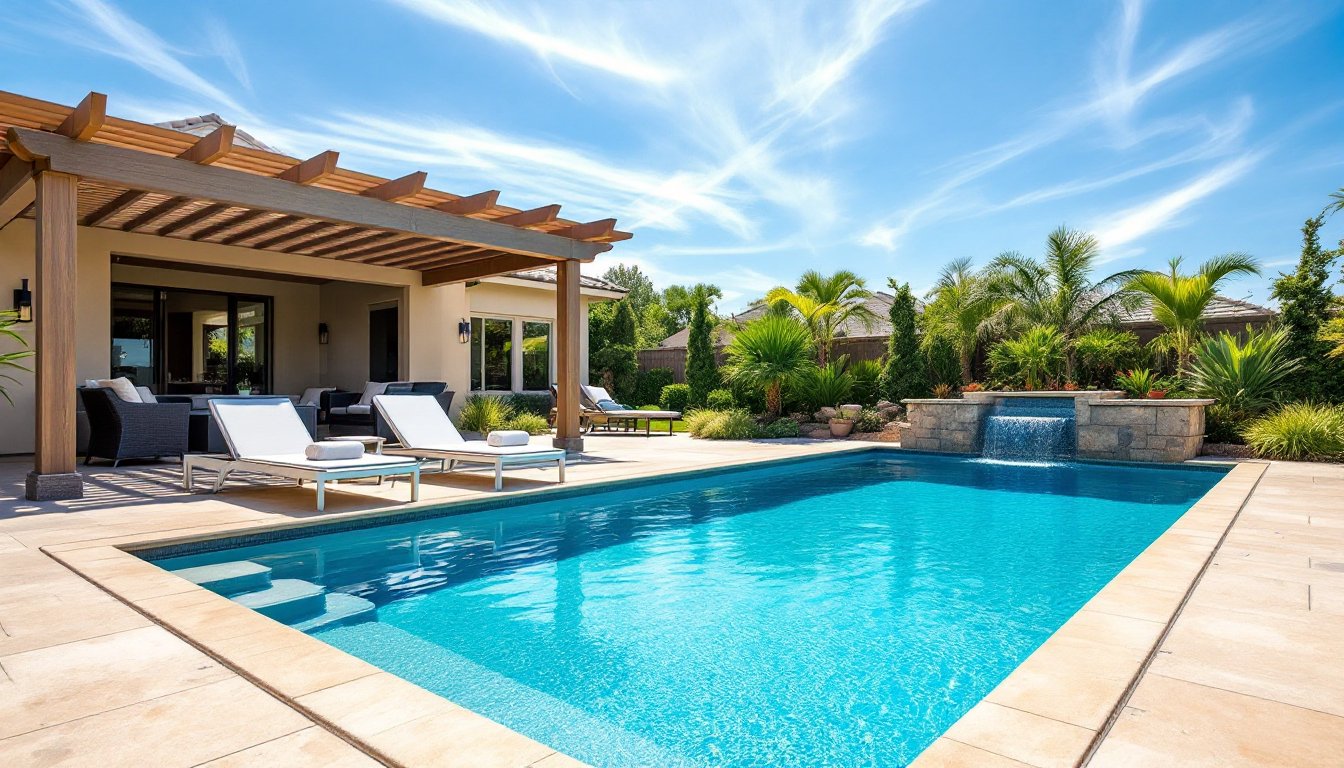
In-ground pools remain the gold standard for long-term value and design flexibility. Gunite (shotcrete) pools offer the most customization, any shape, depth, or finish is possible. They’re built on-site by spraying a concrete mixture over a steel rebar frame, then finished with plaster, pebble, or tile. Expect costs from $50,000 to $100,000+ depending on size, features, and regional labor rates. Gunite pools require permits, structural engineering, and often 8–12 weeks to complete.
Fiberglass shells arrive pre-formed and are craned into an excavated hole. Installation is faster (often 1–2 weeks), and the smooth gel-coat surface resists algae better than plaster. Sizes and shapes are limited to what manufacturers offer, but they’re durable and low-maintenance. Budget $40,000–$80,000 for a mid-size fiberglass pool with basic equipment.
Vinyl-liner pools use a polymer or steel frame with a custom vinyl liner. They’re the most budget-friendly option, typically $25,000–$50,000, but liners need replacement every 7–10 years at $3,000–$5,000 each. They’re gentler on feet and elbows but more prone to punctures from sharp objects or pet claws.
All three types require proper site grading, drainage, and compliance with local setback codes. In most jurisdictions, you’ll need a building permit, electrical inspection for bonding and GFCI protection per NEC Article 680, and fencing that meets barrier requirements (typically 4-foot minimum height with self-closing, self-latching gates). Factor in another $5,000–$15,000 for decking, coping, and basic landscaping.
Above-Ground and Semi-In-Ground Pool Options
Above-ground pools get a bad rap, but modern resin and steel-frame models can look sharp with the right decking and landscaping. They’re fast to install (often DIY-friendly over a weekend), cost $2,000–$10,000 depending on size and build quality, and usually don’t require permits in many areas, though always check local code.
Look for resin-coated steel walls or all-resin construction for corrosion resistance, especially in coastal zones. Oval models (15’×30′ or 18’×33′) offer more swim space than round ones of the same square footage. Pair them with a multi-level deck to hide the walls and create poolside seating. Install on leveled, compacted sand or foam pads, not raw soil, to prevent settling and liner damage.
Semi-in-ground (partial burial) pools split the difference. They’re above-ground models engineered for partial earth contact, typically set 2–3 feet into the ground. This lowers the visual profile, reduces deck height, and can integrate better with sloped yards. They cost $8,000–$20,000 and may require permits depending on depth and your jurisdiction. Use only models rated for burial and ensure proper backfill with gravel, not dirt, to prevent wall corrosion.
Both styles require the same pool water maintenance and chemical balancing as in-ground pools. Invest in a quality pump, filter (sand or cartridge), and test kit from the start, undersized equipment will cost you more in chemicals and frustration.
Natural and Eco-Friendly Pool Concepts
Natural swimming pools (NSPs) use biological filtration instead of chlorine. They’re divided into two zones: a swimming area and a regeneration zone filled with aquatic plants and gravel biofilters that break down organic matter and consume nutrients. The result is chemical-free water that supports wildlife and looks like a designed pond.
NSPs cost $50,000–$100,000+ depending on size and complexity. They need more surface area than conventional pools (often double) to accommodate the planted zone. Expect gradual, natural edges rather than sharp pool coping. Water stays around 65–75°F without heating, cooler than most heated pools but refreshing in summer. Maintenance involves seasonal plant trimming, skimming debris, and occasional gravel cleaning rather than shocking and pH balancing.
Many homeowners are exploring saltwater pool maintenance systems as a gentler alternative to traditional chlorine. Saltwater chlorine generators electrolyze dissolved salt to produce chlorine on-demand, reducing the need to handle and store harsh chemicals. Retrofit kits cost $800–$2,500 and require a salt cell replacement every 3–5 years at $200–$700.
Solar heating is another eco-conscious upgrade. Roof-mounted solar panels (not photovoltaic, but glazed or unglazed polymer collectors) can extend your swim season by 2–3 months in temperate climates. Costs run $3,000–$8,000 installed, with minimal operating expense and a payback period of 3–7 years versus gas or electric heaters. Pair with a thermal pool cover to retain heat overnight and reduce evaporation by up to 95%.
Compact Pool Ideas for Small Backyards
Limited square footage doesn’t mean giving up on a pool. Plunge pools and cocktail pools (typically 8’×12′ to 10’×16′) prioritize cooling off and lounging over lap swimming. Many include built-in benches, jets, or swim-current systems for aquatic exercise. Budget $20,000–$40,000 for a small gunite or fiberglass plunge pool with basic equipment.
Spool designs (spa + pool hybrids) combine heated spa jets at one end with a shallow swim area. They’re ideal for year-round use in moderate climates and fit yards as small as 12’×20′. Most are 4–5 feet deep throughout, which simplifies heating and chemical dosing but limits diving (never jump into shallow water).
For ultra-tight lots, consider a swim spa, a self-contained acrylic unit with adjustable current jets. They’re delivered ready to set on a reinforced concrete pad, require only electrical hookup (often 50-amp service), and cost $15,000–$35,000. No excavation, no permits in many cases, and they’re relocatable if you move.
Maximize small spaces by positioning the pool along a property line (maintaining code setbacks) and using vertical landscaping: trellises, tall grasses, or bamboo screens create privacy without eating horizontal space. If you’re planning a compact setup alongside other features, integrating a thoughtful backyard entertainment area ties everything together for outdoor living.
Skip wide decking on all sides, 6–8 feet on the primary access side is enough. Cantilever coping or use pavers set tight to the pool edge to save inches. Choose light-colored finishes and avoid heavy tile borders: they visually expand the space.
Pool Features and Add-Ons That Elevate Your Design
Tanning ledges (also called baja shelves or sun shelves) are shallow platforms 6–12 inches deep, perfect for loungers, toddlers, or just cooling off. They’re easy to add during construction and cost $2,000–$5,000 depending on size. Pair with umbrellas or cantilever shade structures for all-day comfort.
Waterfalls and rock features add sound and movement. Prefab waterfall kits start around $1,500: custom stonework can run $5,000–$20,000. Use a dedicated booster pump (1–2 HP) for proper flow, don’t rely on your main circulation pump. For ongoing ease, keeping up with a solid pool maintenance checklist ensures features like waterfalls stay debris-free and functional.
LED lighting has become standard, not luxury. Multi-color systems (often controlled via smartphone app) cost $500–$2,000 for a basic pool. Use low-voltage (12V) fixtures rated for wet locations. Install lights during construction, retrofitting requires draining the pool and cutting niches.
Pool automation systems let you control pumps, heaters, lights, and cleaners remotely. Mid-range systems (Pentair, Hayward, Jandy) cost $1,200–$3,000 plus installation. They’re worth it if you have variable-speed pumps, solar heating, or multiple water features, automation can cut energy use by 30–50% with smart scheduling.
Safety covers (mesh or solid) are essential if you have kids or pets. Automatic covers cost $8,000–$15,000 but provide the best security and keep debris out. Manual safety covers run $1,200–$3,000 and require two adults to install/remove. Both beat winter tarps that collect water and aren’t safety-rated.
Landscaping and Poolside Entertaining Enhancements
Decking material sets the tone and affects comfort. Poured concrete is cost-effective ($6–$12/sq ft) and can be stamped, stained, or textured to mimic stone. It gets hot underfoot in direct sun, so consider a broom or brushed finish for traction and lighter colors to reflect heat.
Pavers (concrete, natural stone, or porcelain) offer more design flexibility and are easier to repair, pop out a cracked unit rather than saw-cutting and patching. Expect $12–$25/sq ft installed. Use polymeric sand in joints to resist washout and weed growth. Travertine stays cooler than most materials but needs sealing every 2–3 years in freeze-thaw climates.
Composite or PVC decking works well for raised above-ground pool decks. It won’t splinter or rot, but choose products rated for ground contact and ensure proper ventilation underneath to prevent mold. Costs run $15–$30/sq ft.
For privacy and wind control, plant evergreen hedges (podocarpus, arborvitae) or install slatted fence panels. Local codes often require pool barrier fencing, make it attractive with cedar, aluminum, or ornamental iron rather than chain-link.
Outdoor kitchens and bars turn poolside into an all-day hangout. A simple built-in grill station with countertop and mini-fridge costs $3,000–$8,000 DIY with modular components. Go pro for gas lines, plumbing, and tile work if you want a full outdoor kitchen ($15,000–$40,000). Position cooking areas upwind of the pool to keep smoke and grease away from the water.
Shade structures, pergolas, shade sails, or retractable awnings, are non-negotiable in hot climates. A DIY pergola kit runs $1,500–$4,000: custom-built versions with electrical and fans cost $8,000–$20,000. Shade sails are budget-friendly ($200–$800) but need strong anchor points, ideally into concrete footings or structural posts, not fence rails.
Conclusion
Building a backyard pool is one of the bigger projects most homeowners will tackle, but the payoff in family memories and property value is real. Start with a clear budget, get multiple bids, and don’t skip permits or proper drainage work. Match your pool type to how you’ll actually use it, lap swimmers, families with young kids, and entertainers all have different needs. With the right planning and a bit of sweat equity on the landscaping and finishing touches, you’ll have a backyard retreat that delivers for decades.