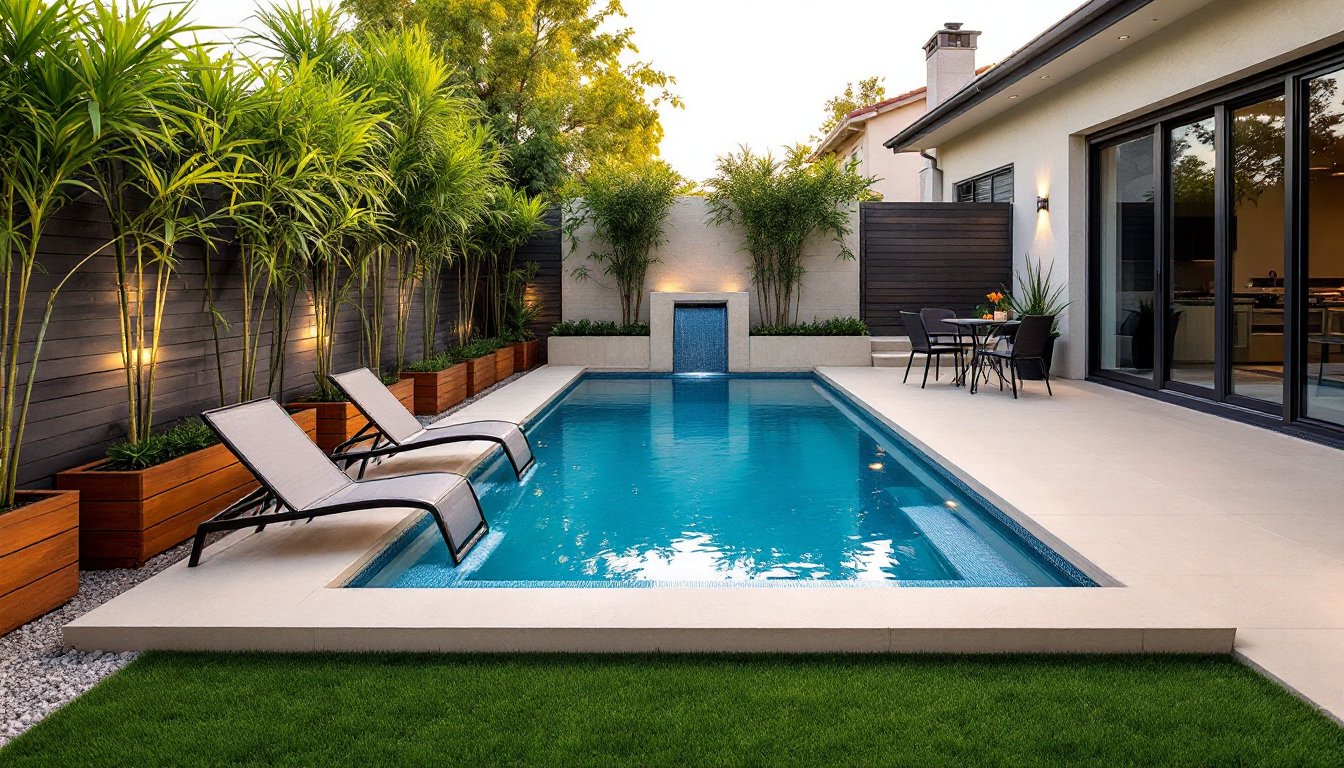
A small backyard doesn’t mean giving up the dream of a pool. With smart design choices and thoughtful planning, homeowners can create a functional, attractive swimming space even when square footage is tight. The key is working with the available space instead of against it, choosing the right shape, materials, and features to make every inch count. This guide breaks down practical pool designs, landscaping strategies, and budget-conscious options that turn compact yards into backyard retreats worth diving into.
Table of Contents
ToggleKey Takeaways
- Small backyard pool design ideas maximize limited space by choosing compact shapes like plunge pools, lap pools, or cocktail pools that cost $15,000 to $50,000 installed depending on materials.
- Fiberglass and vinyl-lined pools are the most budget-friendly small pool options, with installation times of days to weeks compared to gunite pools that require 6–12 weeks of construction.
- Smart features like tanning ledges, built-in seating, integrated lighting, and water features add functionality and visual appeal without cluttering compact pool designs.
- Thoughtful landscaping with vertical plantings, proportional decking (3–5 feet wide), and safety fencing creates a resort-like backyard retreat while keeping the overall footprint small.
- Small pools reduce annual maintenance costs to $500–$1,500 and require significantly less water, chemicals, and heating compared to full-size residential pools.
- Stock tanks and above-ground pools offer budget-friendly alternatives starting at $3,000–$8,000, making them ideal for renters or homeowners testing pool ownership before investing in in-ground construction.
Why Small Pools Are Perfect for Compact Backyards
Small pools deliver the same cooling relief and visual appeal as their larger counterparts, but with lower construction costs, reduced water and chemical usage, and less ongoing maintenance. Homeowners who invest in a low maintenance pool spend less time scrubbing and balancing chemistry, freeing up weekends for actual swimming.
In urban and suburban settings where lot sizes average 0.15 to 0.25 acres, a full-size pool often consumes the entire yard and leaves no room for a patio, garden, or kids’ play area. A compact pool (typically 10’x20′ to 12’x24′) allows for better zoning of outdoor space. Pair it with a small deck or seating area, and the backyard becomes a true multi-use zone.
Maintenance costs scale with water volume. A 400-square-foot pool holds roughly 10,000 to 12,000 gallons, compared to 20,000+ for a standard residential pool. That difference shows up in heating bills, chemical purchases, and pump runtime. Plus, many municipalities require pool permits and setback compliance: smaller footprints often simplify those approvals.
Safety is another advantage. Compact pools are easier to supervise, fence, and secure. For families with young children or pets, a smaller body of water reduces risk while still offering a place to cool off on hot days.
Space-Saving Pool Shapes and Configurations
Choosing the right shape is the foundation of a successful small pool design. Not every lot suits a rectangle, and not every homeowner needs a diving well. These configurations work well when space is at a premium.
Plunge Pools and Cocktail Pools
Plunge pools are small, deep basins designed for cooling off rather than lap swimming. Typical dimensions run 8’x12′ to 10’x16′, with depths of 4 to 7 feet. They’re ideal for hot climates where the goal is quick immersion, not aerobic exercise. Cocktail pools (also called spools) blur the line between a spa and a small pool, often including built-in benches, jets, or heating elements.
Both styles work well in tight side yards, courtyards, or patios. Because they’re compact, excavation and material costs stay low. Fiberglass shells are a popular choice here, they arrive pre-formed, install in days, and require less structural reinforcement than custom gunite.
Expect to pay $15,000 to $30,000 for a basic fiberglass plunge pool installed, depending on region and site access. Adding water features, tile accents, or integrated heating pushes that number higher. If the yard has poor drainage or rocky soil, excavation costs can spike.
Lap Pools for Narrow Yards
Lap pools prioritize length over width, making them perfect for narrow side yards or long, shallow lots. Standard dimensions are 8 to 10 feet wide by 30 to 50 feet long, with consistent depths of 3.5 to 5 feet. Swimmers get a straight-line workout without needing a massive footprint.
These pools often run parallel to the house or fence line, leaving the main yard open for other uses. Because lap pools are typically rectangular with simple contours, they’re easier to build and maintain. Vinyl-lined or fiberglass options keep costs down compared to custom gunite.
One downside: lap pools don’t offer much lounge space. If relaxation is the priority, consider widening one end into a small sitting area or adding a tanning ledge (also called a sun shelf or baja shelf) at a depth of 6 to 12 inches. This creates a shallow perch for chairs or kids without expanding the overall footprint significantly.
Design Features That Enhance Small Pool Spaces
Smart features can make a compact pool feel larger and more functional. The goal is to add utility and visual interest without cluttering the design.
Tanning ledges or baja shelves give small pools a resort feel. These shallow platforms (usually 6 to 12 inches deep) provide a spot for lounge chairs, toddlers, or potted plants. They take up minimal space but expand the pool’s usability.
Built-in seating works well in plunge pools and cocktail pools. Benches or corner seats carved into the pool shell eliminate the need for separate furniture and keep the deck clear. If the pool doubles as a spa, pair seating with hydrotherapy jets for a hot tub effect.
Perimeter overflow (also called vanishing edge or infinity edge) creates the illusion of a larger pool by eliminating the traditional coping lip. Water spills into a hidden catch basin, giving a sleek, modern look. This feature works best on sloped lots where the edge can visually blend with the horizon. It adds $10,000 to $30,000 to construction costs, so it’s not a budget option.
Integrated lighting extends usability into the evening and adds drama. LED pool lights are energy-efficient and available in multi-color options. Install them during construction: retrofitting lights later is expensive and disruptive. Pair underwater lights with landscape lighting along pathways and plantings for a cohesive nighttime aesthetic.
Water features like sheer descent waterfalls, scuppers, or deck jets add sound and movement without taking up much room. A single sheer descent (a thin sheet of water flowing from the pool wall) costs $1,500 to $3,000 installed and creates a focal point that draws the eye upward, making the space feel taller.
Avoid overloading a small pool with too many features. Pick one or two elements that align with how the pool will actually be used, whether that’s exercise, relaxation, or family play.
Integrating Landscaping and Hardscaping Around Your Pool
The area surrounding a small pool matters as much as the pool itself. Thoughtful backyard designs tie the pool into the landscape and maximize usable space.
Decking material should be slip-resistant, durable, and appropriate for the climate. Poured concrete is the most budget-friendly option at $6 to $12 per square foot, and it can be stamped, stained, or textured to mimic stone or wood. Travertine pavers and porcelain tiles offer a high-end look and stay cooler underfoot in direct sun, but expect to pay $15 to $30 per square foot installed.
Keep deck width proportional to the pool. A 3- to 5-foot deck around a small pool is enough for circulation and lounge chairs without overwhelming the yard. If space is extremely tight, consider a deck on just one or two sides and transition directly to landscaping on the others.
Vertical plantings add privacy and greenery without consuming horizontal space. Install tall grasses like ornamental bamboo (clumping varieties, not invasive runners), Italian cypress, or sky pencil holly along fence lines or property edges. Avoid trees with aggressive root systems (willow, poplar, eucalyptus) near the pool shell, roots can crack gunite or lift pavers.
Container gardens and raised planters frame the pool without permanent planting beds. This approach works well for renters or anyone who wants flexibility. Use large pots filled with tropical plants like bird of paradise, elephant ear, or canna lilies for a resort vibe. According to Gardenista, grouping planters in odd numbers creates a more natural, less staged look.
Fencing is often required by local building codes. Check the International Residential Code (IRC) and local amendments, most jurisdictions require a 4- to 5-foot barrier with self-closing, self-latching gates. Fencing doesn’t have to be ugly. Horizontal slat fences, cable rail systems, and glass panels provide safety while keeping sightlines open.
Outdoor lighting should cover pathways, steps, and the pool perimeter for safety. Use low-voltage LED fixtures (12V systems) to minimize electrical risk near water. Uplighting on plants or walls adds depth and keeps the yard from feeling like a black void after dark.
Budget-Friendly Small Pool Options and Materials
Small pools are cheaper than large ones, but costs still vary widely based on materials, site conditions, and features. Here’s what to expect and where to save.
Fiberglass pools are the most popular choice for compact installations. The shell arrives pre-manufactured, and installation takes 3 to 7 days instead of weeks. Prices range from $20,000 to $50,000 installed, depending on size and features. Fiberglass is low-maintenance, algae-resistant, and durable, but shape and size options are limited to whatever the manufacturer offers.
Vinyl-lined pools cost less upfront, typically $15,000 to $35,000 for a small pool. A steel or polymer frame supports a vinyl liner, which sits on a sand or vermiculite base. Liners last 7 to 10 years and cost $3,000 to $5,000 to replace. This option works well for homeowners on a tight budget who don’t mind periodic liner swaps. Vinyl is softer underfoot than concrete but more prone to punctures and UV degradation.
Gunite (shotcrete) pools offer the most design flexibility. Builders spray concrete over a rebar framework, then finish with plaster, pebble, or tile. Costs start around $30,000 for small custom designs and climb quickly with add-ons. Gunite is permanent and highly customizable, but it requires the longest construction timeline (6 to 12 weeks) and the most intensive maintenance. Replastering every 10 to 15 years costs $5,000 to $10,000.
Above-ground pools and stock tank pools are the most budget-friendly options. A quality above-ground pool (resin or steel frame with vinyl liner) runs $3,000 to $8,000 including filtration and basic accessories. Stock tanks, originally designed for livestock watering, have become trendy backyard pools. An 8-foot galvanized stock tank costs around $400 to $800, plus another $300 to $600 for a simple pump and filter. These aren’t permanent installations and won’t add resale value, but they’re great for renters or homeowners testing the water before committing to an in-ground build.
DIY vs. professional installation: Small pools are still major construction projects. Excavation, plumbing, electrical, and backfill require permits and skill. Most jurisdictions require licensed electricians to run pool circuits per National Electrical Code (NEC) Article 680, which governs pool wiring. Hiring pros costs more upfront but avoids costly mistakes and code violations. If budget is tight, consider handling the landscaping and decking yourself while leaving the pool shell and systems to contractors.
Seasonal considerations: If the pool won’t be used year-round, invest in a quality cover. A safety cover (mesh or solid) costs $800 to $2,000 and prevents debris, reduces evaporation, and keeps kids and pets out. Winter covers protect the shell and equipment from freeze damage in cold climates.
Finally, factor in ongoing costs. Even a small pool requires routine water maintenance, filtration, and seasonal care. Homeowners should budget $500 to $1,500 annually for chemicals, equipment, and utilities, depending on climate and pool size. According to The Spruce, regular attention to chemistry and filtration prevents expensive repairs down the road.
A well-designed small pool transforms a compact backyard into a personal retreat. By choosing the right shape, materials, and features, and being realistic about budget and maintenance, homeowners can enjoy the benefits of pool ownership without sacrificing their entire yard or bank account.