A backyard pool doesn’t need to drain your savings account. While in-ground pools can run $30,000 to $100,000 or more depending on size and finishes, creative alternatives bring the cooling relief and recreation for a fraction of that cost, often under $5,000. Homeowners with compact yards and tight budgets now have access to stock tanks, smartly styled above-ground options, and small-footprint plunge pools that deliver function without the sticker shock. This guide breaks down practical, DIY-friendly pool solutions that fit modest lots and modest wallets.
Table of Contents
ToggleKey Takeaways
- Small backyard pool ideas on a budget can cost under $5,000, compared to $30,000–$100,000 for traditional in-ground pools, making them accessible for homeowners with compact yards.
- Stock tanks and above-ground pools dramatically reduce ongoing costs—maintenance averages $30–$80 monthly versus significantly higher expenses for larger installations, and water volume is reduced by 90 percent.
- Proper ground preparation, including a level base of crushed gravel or sand and correct filtration systems, is essential to prevent water damage and extend the lifespan of any budget pool.
- Creative landscaping with vertical plantings, decking surrounds, and shade structures can maximize a small pool’s visual impact and comfort without requiring expensive renovations.
- DIY installation of stock tanks and above-ground pools is realistic for most homeowners, while hiring professionals for excavation and plumbing on plunge pools ensures safety and code compliance.
- Buying pool kits off-season in late summer and fall captures 20–40 percent discounts, and prioritizing basic filtration and chemical maintenance over robotic systems saves thousands initially.
Why a Small Pool Is Perfect for Budget-Conscious Homeowners
Smaller pools cut costs across the board: less excavation, fewer materials, reduced permitting complexity, and lower ongoing maintenance. A 300-gallon stock tank or 12-foot-diameter above-ground pool uses a tenth of the water and chemicals compared to a traditional 20-by-40-foot in-ground installation.
Downsizing doesn’t sacrifice enjoyment. Compact pools still cool bodies on hot days, create a backyard focal point, and add resale appeal in warm-climate markets. They’re ideal for urban or suburban lots where yard space is limited to 500 to 1,000 square feet.
Maintenance expenses drop proportionally with water volume. Chemical costs, energy for filtration and heating, and time spent on cleaning all scale down. Homeowners should budget for ongoing monthly pool maintenance expenses, but smaller systems keep those numbers manageable, often $30 to $80 per month for chemicals and electricity.
Permitting varies by jurisdiction, but many municipalities classify small above-ground and stock-tank pools under different rules than in-ground installations. Always check local codes: some areas require fencing for any water body deeper than 18 inches, while others exempt portable setups under a certain gallonage.
Stock Tank Pools: The Affordable DIY Solution
Galvanized stock tanks, originally designed for livestock watering, have become a go-to budget pool hack. A 6-foot or 8-foot diameter round tank runs $400 to $900, and installation requires no excavation or专业contractor.
Purchase a stock tank from farm-supply retailers or online. Choose galvanized steel for durability and rust resistance. Avoid plastic models if you plan to leave the pool up year-round in sunny climates: UV degradation cracks cheaper plastics within two seasons.
Set the tank on a level, compacted base of crushed gravel or paver sand, at least 4 inches deep. An unlevel base causes uneven water distribution and stress on seams. Use a 4-foot level and a hand tamper to verify the pad is flat within 1/4 inch across the diameter.
Filtration keeps water swimmable. A small cartridge or sand filter rated for 500 to 1,000 gallons pairs with a submersible pump. Drill two holes near the top rim, one for the intake hose, one for the return, and install bulkhead fittings with rubber gaskets to prevent leaks. Silicone caulk won’t hold long-term water pressure: use proper pool-rated fittings.
Stock tanks lack built-in skimmers and drains, so manual skimming and periodic draining are part of the deal. Plan to drain and refill every few weeks during heavy use, or invest in a small chlorinator to extend water life. Safety note: Stock tanks have smooth, slippery walls. Add a slip-resistant step stool or ladder rated for wet conditions.
Above-Ground Pools That Don’t Look Cheap
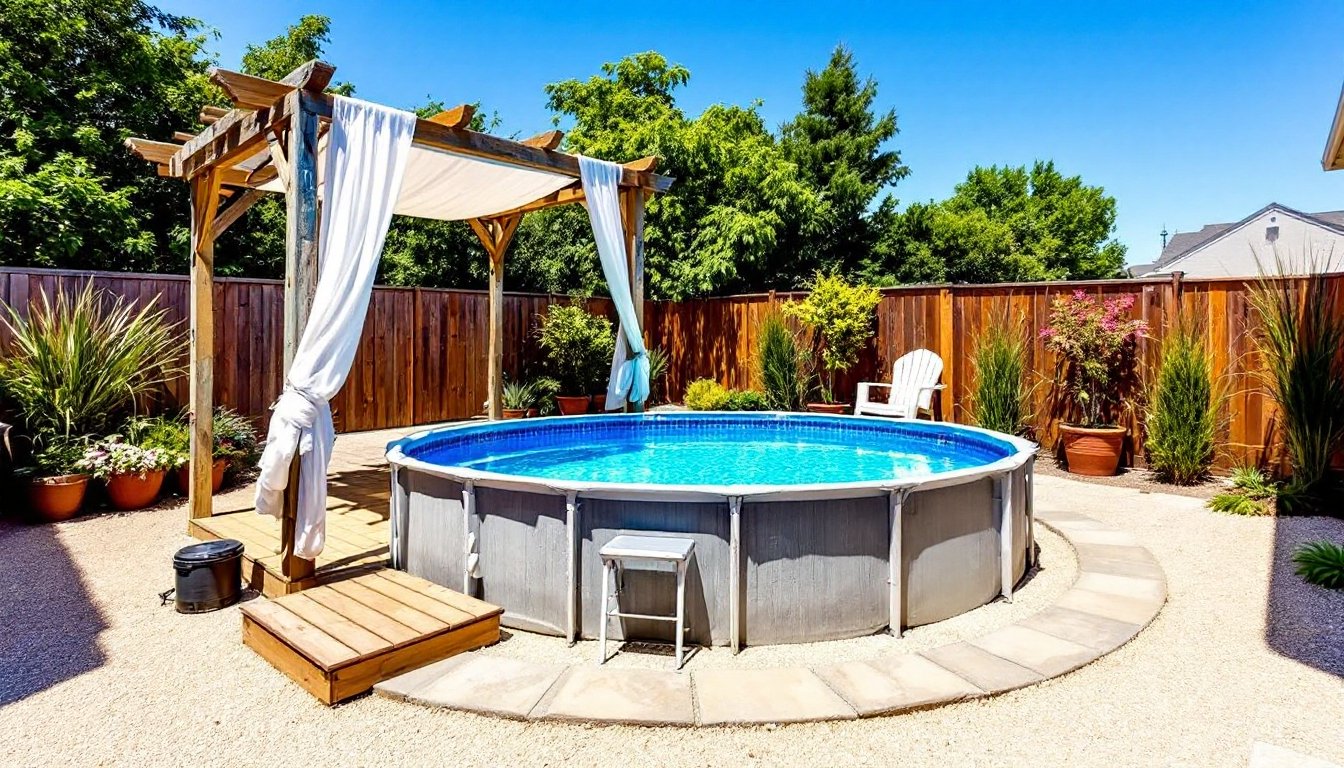
Modern above-ground pools have shed the old corrugated-metal aesthetic. Resin and composite-wall models with wood-grain or stone finishes blend into landscaping when paired with decking or plantings.
A 12-to-18-foot-diameter round pool or 12-by-24-foot oval typically costs $1,500 to $4,000 as a kit, including pump, filter, and ladder. Steel-wall models are cheapest but require rust-resistant coatings in humid climates. Resin frames cost 20 to 30 percent more but resist corrosion and last longer in coastal or high-humidity areas.
Ground prep is critical. Clear vegetation, remove rocks, and create a flat pad of mason sand or foam underlayment. Even a 1-inch dip will show as a low spot once filled, stressing the liner and frame. Use a long 2×4 and level to check the pad in multiple directions.
Disguise the pool wall with a surround deck. Pressure-treated lumber or composite decking built to the pool’s height turns an above-ground setup into a semi-in-ground look. Frame the deck with 2×6 joists on 16-inch centers, supported by concrete footings or deck blocks. This project requires intermediate carpentry skills and often a building permit, since decks over 30 inches high fall under most local codes.
Painting the exterior wall is another low-cost facelift. Use exterior-grade acrylic or spray paint formulated for metal or plastic, depending on your pool’s material. DIY paint makeovers can transform a basic pool into a design feature for under $100 in paint and supplies.
Plunge Pools and Cocktail Pools for Compact Yards
Plunge pools and cocktail pools are purpose-built small in-ground or semi-in-ground options, typically 8 to 12 feet long and 6 to 8 feet wide. They’re deeper than kiddie pools, usually 4 to 5 feet, making them suitable for cooling off and light exercise, though not lap swimming.
Prefabricated fiberglass shells are the budget-friendly route for permanent installations. Expect to pay $10,000 to $20,000 installed, including excavation, plumbing, basic filtration, and backfill. That’s half the cost of a conventional in-ground pool. Concrete or gunite options start higher, $20,000 and up, but allow custom shapes.
Excavation is the largest labor cost. If your yard has accessible soil (no bedrock or high water table) and room for a small excavator, a one-day dig by a local contractor runs $1,500 to $3,000. Rocky soil or tight access that requires hand-digging or a mini-excavator doubles that estimate.
Permits are almost always required for in-ground pools, even small ones. Budget $200 to $1,000 for permit fees and inspections, and plan for 4-foot-tall fencing with a self-closing, self-latching gate to meet residential pool codes in most U.S. jurisdictions. The International Residential Code (IRC) and local amendments govern these requirements.
Plunge pools excel in small courtyards, side yards, or patios where a full-size pool won’t fit. They’re also popular for cold-plunge therapy or pairing with a hot tub for contrast bathing. For design ideas and regional considerations, resources like Sunset offer inspiration tailored to Western climates and compact outdoor spaces.
Creative Landscaping to Maximize Your Pool Area
Strategic landscaping stretches the visual and functional impact of a small pool. The goal is to create enclosure, shade, and flow without crowding the water.
Use vertical plantings to add privacy without eating horizontal space. Bamboo, ornamental grasses, or evergreen shrubs in narrow planters along a fence line create a green wall. Avoid trees with invasive roots (willows, poplars) or heavy leaf drop (oaks, maples) within 10 feet of the pool: roots crack liners and decks, and leaves clog filters.
Define the pool zone with pavers, gravel, or composite decking that extends 3 to 4 feet beyond the pool perimeter. This creates a no-grass buffer, reducing dirt and clippings in the water. Permeable pavers over a gravel base handle drainage better than poured concrete, which cracks with freeze-thaw cycles.
Shade structures keep the water cooler and extend swim comfort. A 10-by-10-foot pop-up canopy costs $150 to $400 and sets up in minutes. For a permanent solution, build a simple pergola with 4×4 posts and 2×6 rafters, then add shade cloth or outdoor fabric. This is a weekend project for confident DIYers with basic framing skills.
Lighting transforms the pool into an evening feature. Low-voltage LED path lights (12-volt systems) are DIY-friendly and safe near water. String lights on posts or overhead beams add ambiance for under $50. Always use GFCI-protected outlets for any electrical near the pool: the National Electrical Code (NEC) requires GFCI protection within 20 feet of water.
Money-Saving Installation and Maintenance Tips
DIY installation saves thousands but demands honest assessment of skill and time. Stock tanks and simple above-ground kits are realistic weekend projects for most homeowners. In-ground plunge pools require excavation and plumbing, hire pros for that unless you have contractor-level experience.
Buy off-season to capture discounts. Pool suppliers and big-box stores clear inventory in late summer and fall: prices drop 20 to 40 percent on above-ground kits and accessories. Purchase then, store over winter, and install in spring.
Skip unnecessary upgrades at first. Basic sand or cartridge filters handle small pools fine: save multi-port valves and automated systems for later. A manual vacuum and skimmer net cost $30 combined and work just as well as a robotic cleaner for pools under 500 gallons.
Maintaining water chemistry prevents expensive repairs and murky water. Test pH and chlorine twice per week during swim season using test strips or a liquid kit. Target pH 7.2 to 7.6 and free chlorine 1 to 3 ppm. Unbalanced water etches liners, corrodes metal, and irritates skin. For homeowners considering low-maintenance pool options, saltwater chlorinators reduce manual chemical dosing but add $400 to $800 upfront.
Cover the pool when not in use. A simple tarp or solar cover cuts evaporation by 90 percent, keeps debris out, and reduces chemical usage. Solar covers also warm the water 5 to 10°F in sunny weather, free heating.
Winterize in cold climates to avoid freeze damage. Drain the pool below the inlet and outlet fittings, blow out plumbing lines with a shop vac, and add pool antifreeze to any remaining water in pipes. For cost planning and seasonal considerations, consult resources like ImproveNet for regional contractor estimates and project guides.
Conclusion
A small pool on a budget isn’t a compromise, it’s a smart fit for real-world yards and wallets. Stock tanks, well-dressed above-ground setups, and compact plunge pools each deliver cooling relief and backyard appeal without the five-figure price tag. With honest prep work, basic tools, and a realistic scope, most homeowners can tackle installation themselves or hire selectively for the heavy lifting. Focus spending on a solid base, proper filtration, and safe fencing, then enjoy the water.