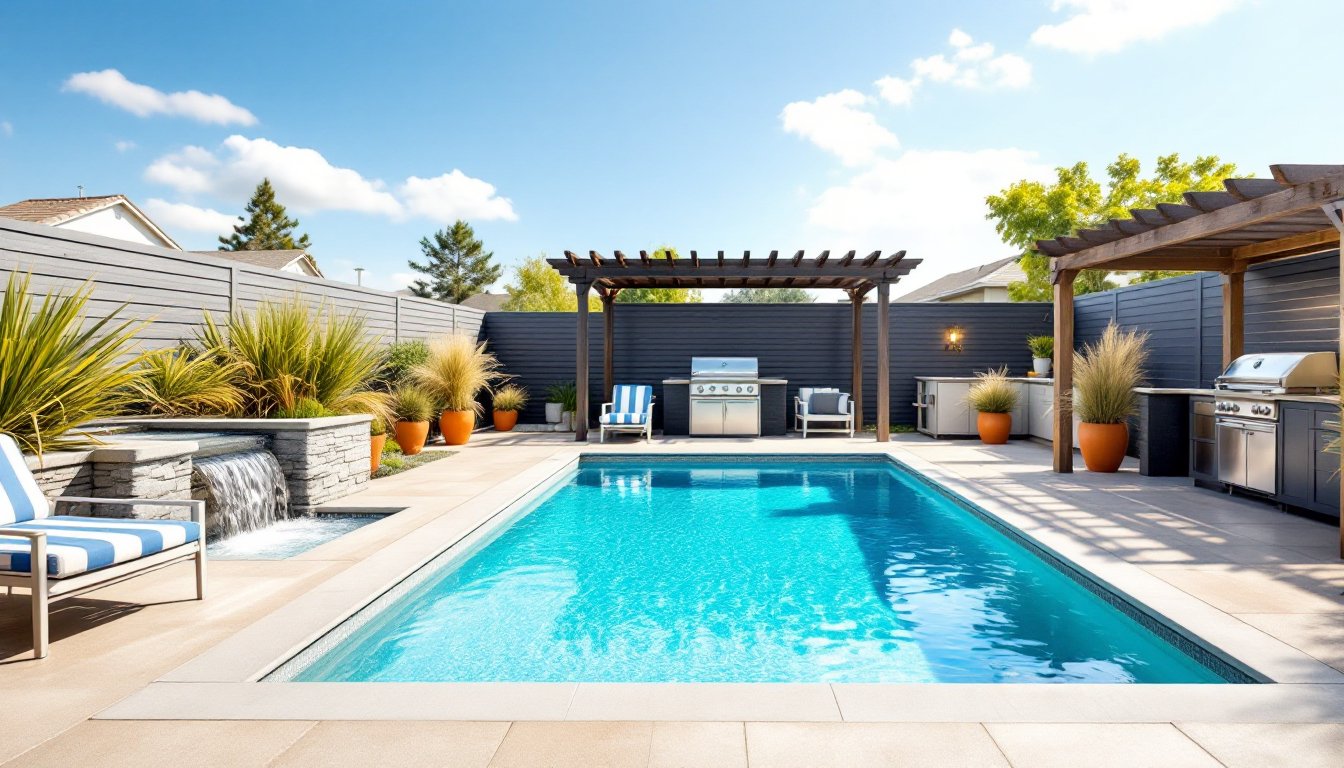
Adding a pool to a backyard isn’t just about beating the summer heat, it’s about creating a functional outdoor living space that adds real value to a home. Whether working with a compact urban lot or planning a full-scale backyard resort, homeowners have more options than ever in 2026. From plunge pools that fit in tight spaces to luxury features that rival commercial installations, the right design depends on budget, available square footage, and intended use. This guide walks through practical pool ideas for different scenarios, along with the structural, permitting, and landscape considerations that separate a successful project from a costly mistake.
Table of Contents
ToggleKey Takeaways
- Swimming pool ideas for backyard range from compact plunge pools (8-14 feet) and cocktail pools to lap pools and luxury features, allowing homeowners to find the right fit for any space and budget.
- Small backyard pools like plunge pools and swim spas cost significantly less to operate, with chemical and heating expenses staying low due to smaller water volumes of 3,000 to 6,000 gallons.
- Luxury pool features such as infinity edges ($15,000-$35,000), tanning ledges, waterfalls, and automated systems add value but require careful ROI consideration before installation.
- Above-ground pools remain the most affordable entry point at $1,500 to $3,500, while vinyl-liner inground pools offer a middle-ground option at $25,000 to $40,000 compared to $50,000+ for gunite pools.
- Smart landscaping with low-debris plants, proper decking materials, shade structures, and entertaining features like outdoor kitchens and fire pits transform a pool into a year-round backyard destination.
- Always verify local permitting requirements and safety codes—most jurisdictions mandate permits for inground pools and often for above-ground pools with decks, protecting your investment and future home sales.
Small Backyard Pool Designs That Maximize Space
Limited square footage doesn’t mean giving up on a pool. Compact designs work well in urban yards, and modern construction methods make installation feasible in spaces that would’ve been impossible a decade ago.
Plunge Pools and Cocktail Pools
Plunge pools typically measure 8 to 14 feet long and 6 to 8 feet wide, small enough to fit in a narrow side yard or city patio. These pools prioritize cooling off over swimming laps. Depth ranges from 4 to 7 feet, which allows for full-body immersion without requiring the same excavation depth as a traditional pool.
Cocktail pools (also called spools) combine the compact footprint of a plunge pool with built-in seating and sometimes jets for resistance swimming or hydrotherapy. They’re typically fiberglass shells, which speed up installation compared to gunite. Expect a footprint around 10 by 16 feet. Many models include integrated benches, LED lighting, and optional heating systems.
Both types work well with concrete decking or pavers. Because of their smaller volume, usually 3,000 to 6,000 gallons versus 15,000+ for a standard pool, chemical costs and heating expenses stay low. Homeowners considering these should verify local setback requirements: many jurisdictions require pools to sit at least 5 feet from property lines.
Lap Pools for Narrow Yards
A lap pool typically runs 40 to 60 feet long but only 8 to 10 feet wide. This makes them ideal for side yards or long, narrow lots. The standard depth is 3.5 to 4 feet, though some swimmers prefer 5 feet for easier push-offs.
Lap pools can be gunite (sprayed concrete), vinyl-lined, or fiberglass. Gunite offers the most flexibility in custom dimensions but requires a longer cure time and costs more upfront. Fiberglass lap pools arrive as a single shell and install in days, but size options are limited to what fits on a flatbed truck, usually under 40 feet.
For those working with even tighter dimensions, swim spas (12 to 20 feet long) provide a current to swim against, eliminating the need for a full-length pool. They’re essentially oversized hot tubs with adjustable jets. Installation is simpler since they sit above grade or require minimal excavation, though most still benefit from a concrete pad and proper electrical hookup (typically a dedicated 50-amp circuit).
Luxury Pool Features to Elevate Your Design
High-end features add functionality and visual interest, but they also increase both construction and ongoing maintenance costs. Homeowners should weigh the upfront investment against how often they’ll actually use each feature.
Infinity edges create the illusion that water spills over the horizon. They work best on sloped lots where the catch basin can sit below the main pool elevation. The recirculating pump runs continuously during operation, which increases energy use. Expect to add $15,000 to $35,000 to a standard pool budget for this feature, depending on edge length and site grading complexity.
Tanning ledges (also called baja shelves or sun shelves) are shallow platforms, typically 6 to 12 inches deep, built into the pool perimeter. They’re popular with families who have young children and anyone who wants to lounge in water without full immersion. Standard dimensions run 6 to 8 feet wide and as long as the pool allows. Adding one during initial construction is straightforward: retrofitting later requires cutting into the shell.
Waterfalls and grottos range from simple spillways to elaborate rock formations with caves and slide-outs. Natural stone looks best but adds significant weight, verify that soil conditions support the load, especially on hillside installations. Prefab fiberglass or faux-rock panels offer a lighter, less expensive alternative. Any water feature requires its own pump and plumbing loop, plus a GFCI-protected electrical circuit.
LED lighting has replaced halogen in most new pools. Modern systems offer color-changing options, smartphone control, and dramatically lower energy use, around 50 watts for a full pool versus 300+ for older incandescent fixtures. Most codes require pool lights to operate on 12-volt systems with transformers located at least 5 feet from the water’s edge.
Automated systems handle chemical dosing, filtration schedules, and heater operation via smartphone apps. They cost $1,500 to $4,000 installed but reduce the time spent testing water and adjusting valves. For anyone juggling pool upkeep with a busy schedule, automation systems that support low-maintenance routines pay off in convenience.
Budget-Friendly Pool Options for DIY Homeowners
Not every pool requires a five-figure contract with a commercial installer. Several options bring costs down, though they involve trade-offs in durability, aesthetics, or labor.
Above-ground pools remain the most affordable entry point. Round models in the 24-foot diameter range run $1,500 to $3,500 with pump and filter included. Oval pools (15 by 30 feet is common) cost slightly more. The pool itself can go up in a weekend with two people, but a level base is critical. Most installers recommend a 4-to-6-inch sand or stone dust bed, compacted and checked with a transit level. Unlevel installations stress the walls and void most warranties.
Deck additions improve aesthetics and make entry easier, but homeowners should budget another $3,000 to $8,000 for a pressure-treated wood deck surrounding half the pool. Some municipalities classify decked above-ground pools as permanent structures, triggering permit requirements and setback rules similar to inground pools.
Stock-tank pools gained popularity as a DIY alternative during recent years. Galvanized steel livestock tanks (6 to 8 feet in diameter, 2 feet deep) cost $400 to $800. Add a basic pool pump and filter ($200 to $400) and the total outlay stays under $1,500. These work for cooling off but aren’t deep enough for swimming. Chlorine or saltwater systems keep water clean, though galvanized steel can react with certain pool chemicals, many DIYers apply a waterproof sealant or pond liner to the interior first.
Vinyl-liner inground pools represent the middle ground. A basic rectangular pool (16 by 32 feet) typically costs $25,000 to $40,000 installed, compared to $50,000+ for equivalent gunite. The liner itself lasts 7 to 10 years and costs $3,000 to $5,000 to replace, which should factor into long-term budgeting. Some experienced DIYers tackle vinyl-liner installations themselves, handling excavation, wall assembly, plumbing, and electrical rough-in, then hiring a pro for the liner installation and final hookup. That can cut costs by 30 to 40 percent but requires familiarity with heavy equipment and local codes.
Anyone going the DIY route should confirm whether the project requires permits. Most jurisdictions mandate permits for inground pools and often for above-ground pools with decks. Inspections typically cover excavation depth, electrical bonding (all metal components and water must be bonded to prevent shock), and fence requirements. Many areas require a 4-foot barrier with self-closing, self-latching gates around any pool deeper than 18 inches. Skipping permits risks fines and complicates future home sales. Understanding potential maintenance costs helps homeowners budget accurately beyond the initial installation.
Pool Landscaping and Entertaining Ideas
The pool itself is only part of the backyard setup. Thoughtful landscaping and functional entertaining spaces make the difference between a pool that gets used daily and one that sits idle.
Decking materials take a beating from water, sun, and foot traffic. Concrete (poured or stamped) is durable and affordable, expect $6 to $12 per square foot installed. It gets hot underfoot in direct sun, so most installers recommend a broom or salt finish for slip resistance and a lighter color to reduce heat absorption. Pavers (concrete, brick, or natural stone) cost $10 to $25 per square foot but allow for easier repairs: individual units can be lifted and replaced if they crack or settle. Composite decking (typically used for above-ground pools) runs $8 to $15 per square foot and stays cooler than vinyl but hotter than concrete.
Avoid wood decking directly around inground pools, it warps, splinters, and requires yearly sealing. If wood is the preferred aesthetic, keep it elevated on a separate deck structure at least 2 feet from the pool coping.
Plant selection should prioritize low-debris species. Palms, ornamental grasses, and succulents look good and drop minimal leaves. Avoid trees with invasive root systems (willows, poplars, some maples) within 15 feet of the pool shell, they can crack walls and lift decking. Flowering shrubs like hibiscus or oleander add color but require regular pruning to prevent debris from clogging skimmers.
Shade structures extend pool use during peak heat. Pergolas provide partial shade and support climbing vines or retractable canopies. A basic 10-by-12-foot cedar pergola costs $2,500 to $4,500 installed. Cantilever umbrellas offer adjustable shade without a center pole obstructing seating areas, expect $300 to $800 for commercial-grade models with fade-resistant fabric. For permanent coverage, consider a pool cabana or pavilion, though these often require separate permits and add $10,000+ to the budget.
Outdoor kitchens and fire features turn the pool area into a true backyard entertainment space. A basic built-in grill with concrete countertop and storage runs $3,000 to $6,000. Add a refrigerator, sink, and bar seating, and costs climb to $8,000 to $15,000. Gas fire pits (either natural gas or propane) start around $1,200 for a prefab unit: custom stone or tile designs cost $3,000 to $8,000. Both require dedicated gas lines and should sit at least 10 feet from the pool to meet most fire codes.
Lighting extends usability after dark. Low-voltage LED path lights (12-volt systems) highlight walkways and plant beds, typically costing $40 to $80 per fixture. String lights or permanent overhead fixtures controlled by dimmers create ambiance without glare. According to creative outdoor design resources, layered lighting, combining pool lights, landscape spots, and overhead fixtures, offers the most flexibility for different activities. Regular water quality management with proven pool maintenance strategies keeps the space inviting all season long.
Conclusion
A well-planned pool fits the homeowner’s space, budget, and lifestyle without becoming a maintenance burden. Small-footprint designs work in tight yards, luxury features add resort-style appeal, and budget-friendly options make pools accessible to more homeowners. Pairing the pool with smart landscaping and functional entertaining areas creates a backyard that gets used year-round. Proper planning, attention to codes, and realistic budgeting separate successful projects from expensive regrets.