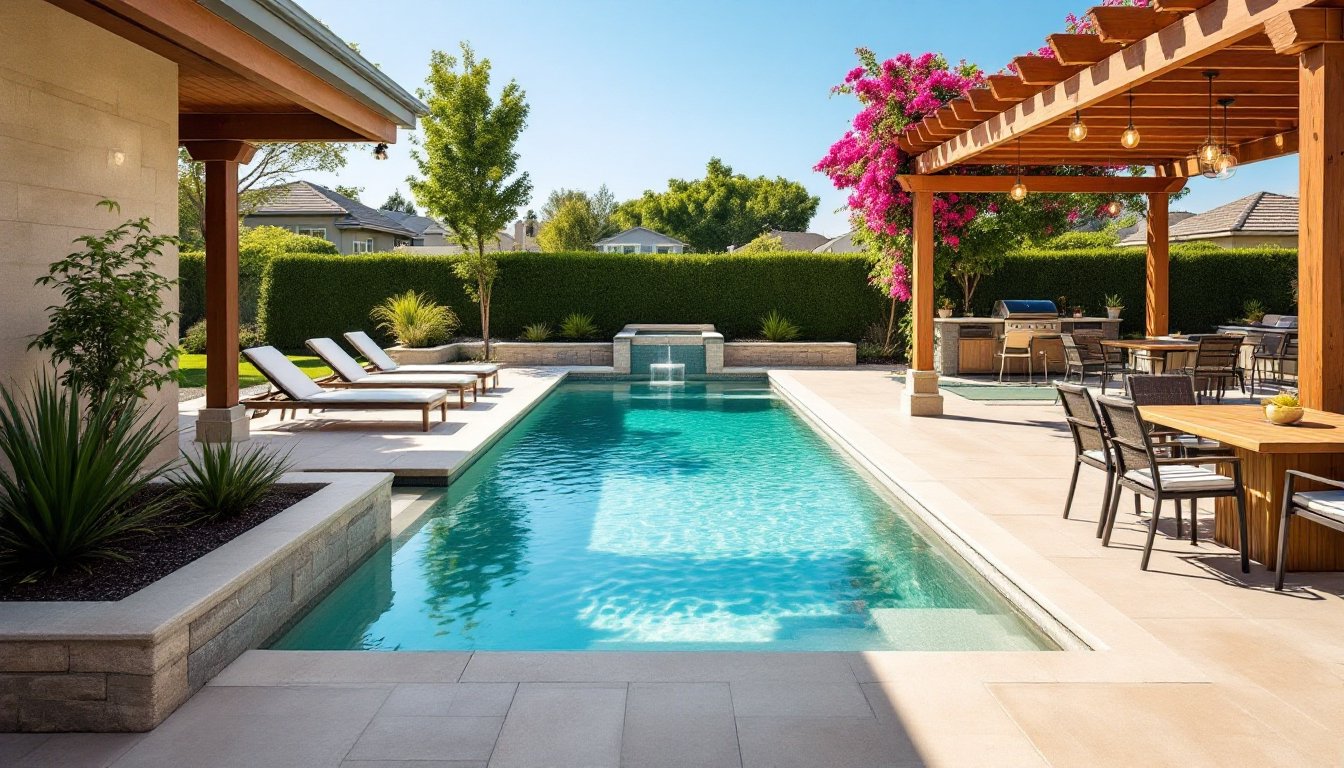
A well-designed pool and patio turns a backyard into a functional retreat for family gatherings, summer cooldowns, and evening relaxation. Whether working with a compact urban lot or a sprawling suburban yard, smart planning makes the difference between a forgettable setup and an outdoor space that feels like an extension of the home. This guide covers layout strategies, material choices, landscaping approaches, and practical upgrades that improve both usability and aesthetics, without requiring a contractor’s budget or expertise.
Table of Contents
ToggleKey Takeaways
- Strategic backyard pool and patio ideas start with proper layout planning—position the pool for maximum sun exposure while keeping the patio in partial shade, and ensure at least 3–4 feet of decking around the pool perimeter for safety and equipment access.
- Choose patio materials based on climate and maintenance priorities: concrete offers affordability, pavers provide better drainage, while natural stone handles freeze-thaw cycles best in northern climates.
- Select low-maintenance landscaping like ornamental grasses and evergreen shrubs positioned 6–10 feet from the pool edge to minimize debris and prevent root intrusion into plumbing.
- Quality outdoor furniture with powder-coated aluminum frames and solution-dyed acrylic cushions resists UV damage and moisture better than cheaper alternatives, extending the lifespan of your backyard retreat.
- Functional pool lighting must meet code requirements with GFCI-protected underwater lights, while layered ambient lighting—path lights, uplighting, and string lights—creates evening ambiance and improves safety.
- Budget-friendly upgrades like concrete staining, patio extensions with gravel, and DIY fire features deliver immediate impact without requiring contractors, making them ideal for increasing usability and enjoyment of your outdoor space.
Designing the Perfect Pool and Patio Layout
Start by mapping the yard on graph paper or using free design software. Mark existing structures, utilities, and setback requirements, most jurisdictions require pools to sit at least 5–10 feet from property lines, though local codes vary. This step prevents costly redesigns once excavation begins.
Pool placement dictates patio flow. Position the pool where it receives maximum sun exposure (typically south-facing in the Northern Hemisphere) while keeping the patio in partial shade for daytime use. A common mistake is centering the pool in the yard, which fragments usable space. Instead, push the pool toward one side and allocate the remaining area for dining, lounging, or outdoor entertaining zones.
Patio dimensions should accommodate furniture with clearance. A 12×16-foot patio fits a six-person dining table with walking space: bump it to 16×20 feet to add lounge chairs or a grill station. For traffic flow, leave at least 3–4 feet of decking around the pool perimeter, enough for safe movement and pool equipment access.
Space Planning for Different Yard Sizes
Small yards (under 1,500 sq ft) benefit from plunge pools or cocktail pools (typically 10×16 feet or smaller). These occupy less square footage while still providing cooling and visual appeal. Pair a compact pool with a multi-level patio, an elevated deck for dining and a lower sunken section at pool level, to create distinct zones without sprawl.
Medium yards (1,500–5,000 sq ft) handle standard rectangular or kidney-shaped pools (14×28 feet average) alongside a 500–700 square foot patio. L-shaped layouts work well here: the pool anchors one leg, the patio the other, with landscaping filling the corner.
Large yards (5,000+ sq ft) allow for resort-style features like swim-up bars, tanning ledges (also called baja shelves), and separate spa areas. Avoid the temptation to oversize the pool, a 20×40-foot pool demands significant heating, chemical, and cleaning costs. Instead, invest in thoughtful backyard features that add functionality, like fire pits or outdoor kitchens positioned 15+ feet from the pool to keep smoke and grease away from swimmers.
Patio Materials That Complement Your Pool
Patio material choice affects slip resistance, heat retention, maintenance, and longevity. Concrete remains the most cost-effective option at $6–12 per square foot (installed). Standard broom-finish concrete offers traction but heats up in direct sun: adding a cool-deck coating or light-colored stain reduces surface temperatures by 20–30°F.
Pavers, concrete, clay, or natural stone, cost $12–25 per square foot but deliver better drainage and easier repairs (replace individual units rather than patching). Travertine and limestone pavers stay cooler underfoot than darker materials and resist pool chemical staining. Install pavers over a compacted gravel base with polymeric sand in the joints to prevent weed growth and shifting.
Stamped concrete mimics stone or tile patterns at $10–18 per square foot. It’s popular for curved pool designs where cutting pavers becomes labor-intensive. Seal stamped concrete every 2–3 years to maintain the pattern and prevent surface degradation from chlorine splash-out.
Natural stone (bluestone, flagstone, slate) ranges from $15–40 per square foot depending on thickness and origin. These materials handle freeze-thaw cycles better than concrete in northern climates and develop a weathered patina over time. Expect irregular edges and color variation, part of the appeal but a dealbreaker for those wanting uniform appearance.
Avoid wood decking directly adjacent to pools. Constant moisture promotes rot, warping, and mildew even with pressure-treated lumber. If wood aesthetics are non-negotiable, use composite decking at least 2 feet back from the pool edge, with a concrete or paver coping in between.
Match the pool coping (the cap around the pool edge) to the patio material or use a contrasting border. Bullnose coping (rounded edge) prevents scraped shins and offers a clean transition between pool and patio.
Landscaping and Greenery Around Your Pool Area
Plant selection near pools requires balancing aesthetics with low-maintenance realities. Skip trees and shrubs that drop excessive leaves, flowers, or seed pods, debris clogs skimmers and increases cleaning time. Good choices include ornamental grasses (like blue fescue or fountain grass), yucca, agave, and palms in warm climates.
Evergreen shrubs (boxwood, holly, juniper) provide year-round privacy screening without seasonal cleanup. Position tall plants 6–10 feet from the pool edge to avoid root intrusion into plumbing lines and allow airflow that reduces humidity and mildew.
Create a planting buffer between the patio and lawn using mulched beds or gravel strips. This prevents grass clippings from blowing into the pool and establishes a visual boundary. River rock or pea gravel (1–2 inches deep over landscape fabric) works well: refresh annually as material settles.
For vertical interest, install pergolas or arbors with climbing vines (bougainvillea, wisteria, clematis) on the side opposite prevailing winds. This adds shade without dropping debris directly into the water. A well-placed pergola installation can define dining areas while keeping the pool deck open.
Potted plants in large containers (at least 18-inch diameter) offer flexibility for seasonal swaps and can be moved during pool parties. Choose self-watering planters to reduce maintenance in hot months. Avoid terra cotta near pools, salt and chlorine cause surface flaking.
Consider integrating a rain garden or bioswale at the yard’s low point to manage pool backwash and runoff. Most municipalities prohibit draining chlorinated water into storm drains: a planted infiltration area filters chemicals before water reaches groundwater. Check local regulations before installation.
Outdoor Furniture and Shade Solutions
Pool furniture faces constant UV exposure, moisture, and temperature swings. Aluminum frames with powder-coated finishes resist rust and hold up better than steel. Pair with solution-dyed acrylic cushions (Sunbrella is the benchmark), the color goes through the fiber rather than surface-dyed, so fading is minimal even after years of sun.
Resin wicker offers a softer look than metal and drains quickly after rain. Check that the frame underneath is aluminum, not steel, which corrodes over time. Budget $600–1,200 for a quality four-piece seating set (two chairs, loveseat, coffee table).
For dining, teak remains the gold standard even though higher cost ($1,500–3,000 for a six-person table and chairs). It weathers to a silver-gray patina without treatment, though annual oiling maintains the original honey color. Eucalyptus and acacia cost less ($800–1,500) but require more frequent sealing.
Shade structures impact comfort as much as furniture. Cantilever umbrellas ($300–800) provide offset shade without a center pole obstructing tables. Look for bases weighing at least 75 pounds or in-ground mounts in windy areas.
Retractable awnings ($1,000–3,000 installed) attach to the house and extend over 10–15 feet of patio. They retract during winter or storms, extending lifespan. Manual crank models cost half as much as motorized but require effort to operate.
Shade sails, tensioned fabric triangles or squares, run $200–600 for DIY kits. Install at different heights to create visual interest and allow hot air to escape. Use stainless steel hardware and anchor to posts sunk 3 feet deep in concrete: these catch significant wind load.
For a permanent solution, consider a louvered pergola with adjustable slats ($3,000–8,000). Motorized versions let users control sun exposure throughout the day. These often integrate LED lighting and drainage systems for year-round use, making them ideal for those planning an entertainment-focused backyard.
Lighting Ideas for Evening Ambiance
Functional pool and patio lighting serves safety and ambiance. Start with code-compliant pool lighting, most jurisdictions require underwater lights on a GFCI-protected circuit with bonding to the pool structure. LED pool lights ($200–500 installed per fixture) last 20,000+ hours and come in color-changing options controlled via smartphone apps.
Path lighting along walkways and steps prevents trips after dark. Space low-voltage LED fixtures (2–3 watts each) 6–8 feet apart for continuous coverage. Solar path lights work in sunny yards but deliver inconsistent brightness in shaded areas or northern climates with shorter days.
Uplighting transforms landscaping into nighttime focal points. Position 3–5 watt spotlights at the base of trees or architectural plants (palms, ornamental grasses) to cast dramatic shadows. Use warm white (2700–3000K) for a natural glow rather than stark daylight tones.
String lights (cafe lights or bistro lights) add a casual, festive feel. Hang them 8–10 feet high on posts or along fence lines using commercial-grade strands with replaceable bulbs. Many homeowners run string lights from the house, which works if the circuit can handle the load, calculate wattage per bulb × number of bulbs and don’t exceed 80% of the breaker rating.
For task lighting around grills or outdoor kitchens, mount dusk-to-dawn LED floodlights (20–30 watts) on adjustable brackets. These provide bright, focused light without illuminating the entire yard.
Smart lighting systems (Philips Hue outdoor, LIFX) integrate with home automation and allow scene programming, dim lights for late-night swims, bright white for cleaning, color washes for parties. Expect to invest $500–1,500 for a whole-system setup with hub and fixtures.
Always bury low-voltage wiring 6 inches deep in conduit to prevent accidental damage from edging or aerating. For line-voltage (120V) runs, hire a licensed electrician, improper pool wiring creates serious shock hazards.
Budget-Friendly Pool and Patio Upgrades
Not every improvement requires a construction crew. Resurfacing concrete patios with concrete stain or epoxy coatings costs $2–5 per square foot (DIY) and transforms dated gray slabs. Power-wash first, apply the product per manufacturer instructions, and seal for longevity. Houzz showcases hundreds of before-and-after examples for color and technique inspiration.
Adding a patio extension using gravel or decomposed granite runs $3–7 per square foot. Excavate 4 inches, lay landscape fabric, add 2 inches of base rock, then top with 2 inches of finish material. Tamp each layer. This DIY-friendly option creates lounge zones or fire pit areas without pouring concrete.
Outdoor rugs ($100–400) define seating areas and add color. Choose polypropylene rugs designed for exterior use, they resist mold, fade, and clean with a hose. Anchor corners with furniture or rug tape to prevent wind lift.
DIY planters from galvanized stock tanks ($40–80 each) bring industrial-chic style. Drill drainage holes, fill with potting mix, and plant ornamental grasses or tropicals. These double as privacy screens when placed strategically.
Pool waterfall or fountain kits ($150–600) install without replumbing. Many attach to existing return jets using flexible tubing and create soothing sound plus improved circulation. Choose models with adjustable flow rates to control noise levels.
Fire features range from portable propane fire pits ($200–500) to DIY concrete bowls with gas burner inserts ($300–600 for materials). Place fire features 15+ feet from the house and check local ordinances, some municipalities restrict open flames in residential areas. A thoughtfully placed fire pit enhances outdoor entertaining and extends the season into cooler months.
Painting pool tiles or updating coping refreshes the look without resurfacing the entire pool. Epoxy pool paint ($200–400 for an average pool) lasts 3–5 years. Drain the pool, acid-wash, let dry completely, then roll on two coats. This is a weekend project for those comfortable with pool chemistry and surface prep.
Shade sails and outdoor curtains ($100–300) attach to existing structures using eye bolts and provide instant privacy or sun protection. Outdoor-rated fabrics resist mildew and UV damage.
For those planning broader projects, small yards benefit from space-saving designs like compact pool layouts that incorporate dual-purpose features. Regional design ideas from sources like Southern Living can also inspire material choices suited to local climate and aesthetics.
Most upgrades deliver the best return when they improve daily function, better lighting for evening swims, comfortable seating for longer outdoor time, or low-maintenance landscaping that reduces weekend chores. Focus spending on elements that match how the space actually gets used rather than chasing trends that look good in photos but don’t fit the household’s routine.